
Archive for the ‘dreams’ category
9

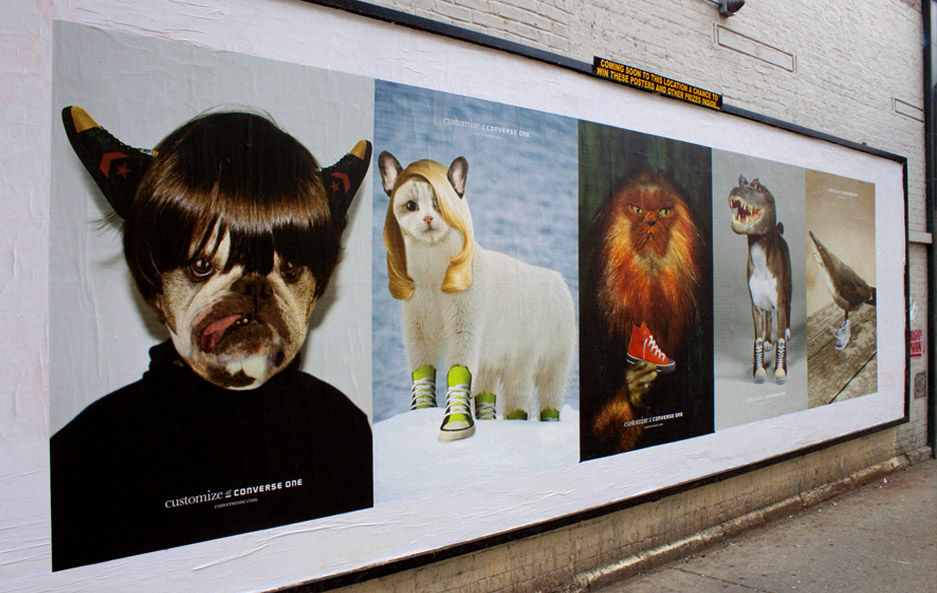
A post apocalyptic fantasy nightmare in which humanity’s legacy is threatened. Takes place in a parallel universe, where a race of oppressed rag dolls fights for survival.
FML: Your everyday life stories
Today, it’s my birthday. I’m a pastry chef by profession. Not only did my family buy a cake from my bakery, I had to make it myself and inscribe it with ‘Happy Birthday Dad’. The worst part is, they asked money from me to pay for it. FML
Goollery
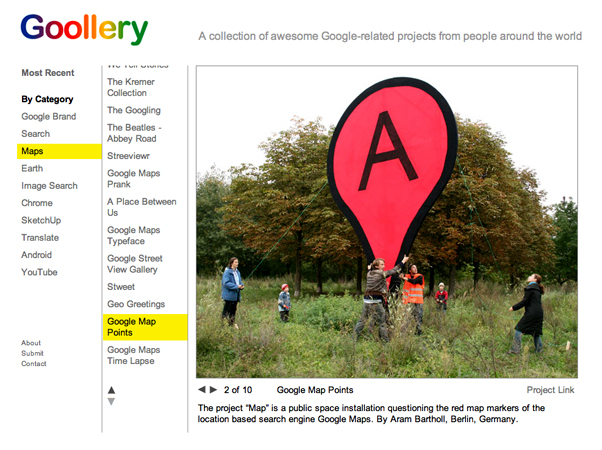
Many people are creating projects based on free Google tools, APIs, and Google brand as inspiration at large. Goollery is an online gallery dedicated to collect, archive and showcase some of the most creative, fun and innovative Google-related projects from people around the world.
Goollery is an independent project by Ji Lee, Jeanelle Mak, Francisco Hui, Karishma Sheth, Scott Suiter, and Andrew Bonventre. Goollery is not a Google website.
Daft Bodies - Harder, Better, Faster, Stronger
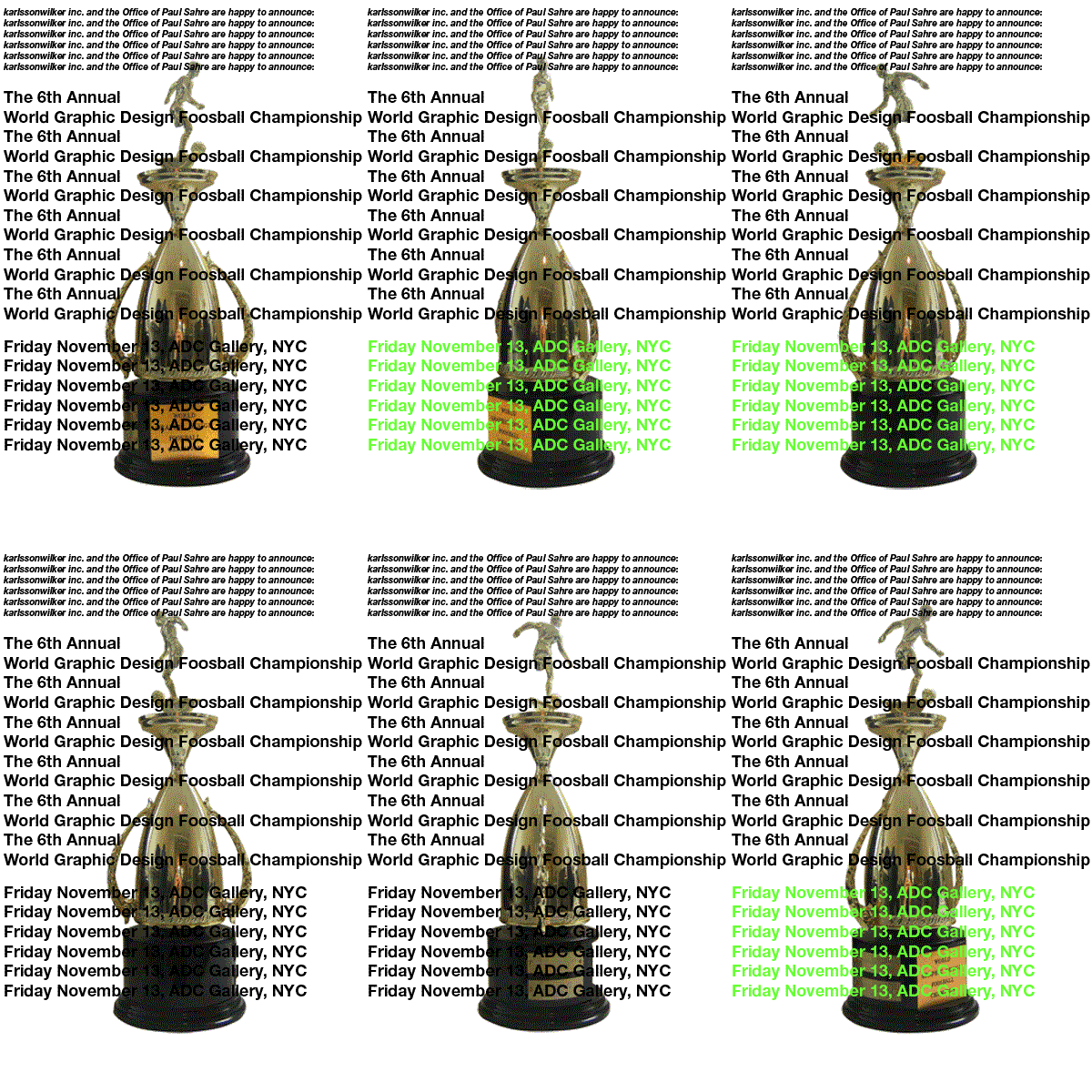
WORLD GRAPHIC DESIGN FOOSBALL CHAMPIONSHIP 2009
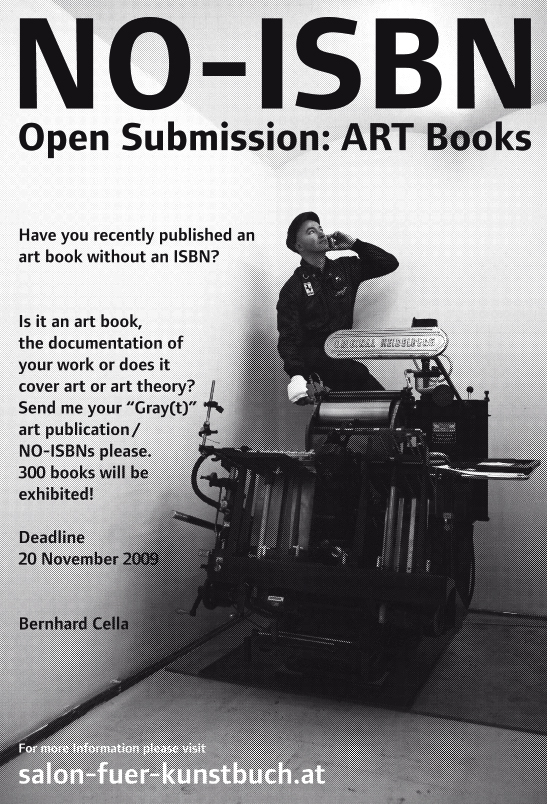
NO-ISBN
Open Submission for ART Books
Have you recently published an Art book without ISBN number? Is it an Art book, the documentation of your work or does it cover Art or Art theory?I am looking for publications by international practitioners in the fields of contemporary Art and theory that have recently been realised without a distributor/publisher.
I am interested in any form or shape of material. I will select 300 books to be exhibited and distributed at the > Galerie für Zeitgenössische Kunst Leipzig in Spring 2010. This project is a part of my next solo exhibition there.
All selected participants will be part of the exhibition which will last for a full year and will also cover the whole period of the > Leipzig Book Fair in spring 2010.Participants will also be offered to become a member of the Salon für Kunstbuch distribution network - online as well as retail distribution for Art Books.
Jazztronik × Asako Toki from Cymbals - Joker Man
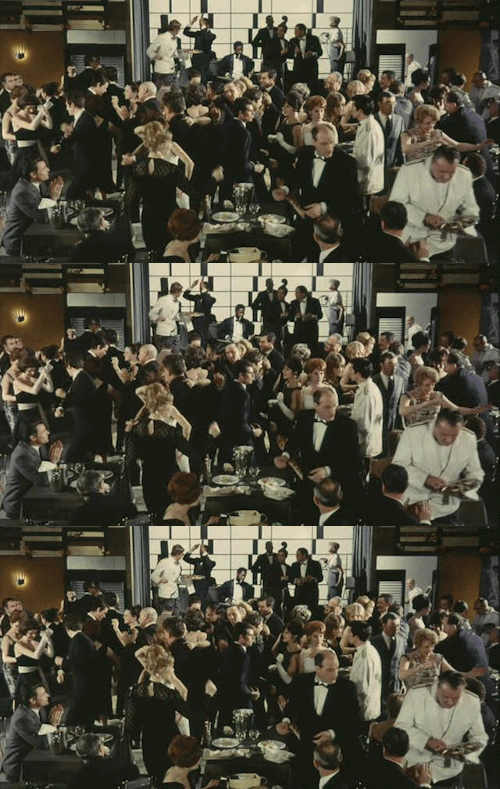
Businessman Dancing on Chinese Subway
This was an experiment conducted on a Beijing subway to see what Chinese people would do if someone flipped out and started dancing. We shot on a 5D Mark II and two hidden cameras–Leica D-Lux 2 and a Panasonic DVX 100A. People were surprisingly unfazed. Song is Kids by MGMT.
The Medici: Godfathers of the Renaissance / Birth of a Dynasty
The Oxford Project
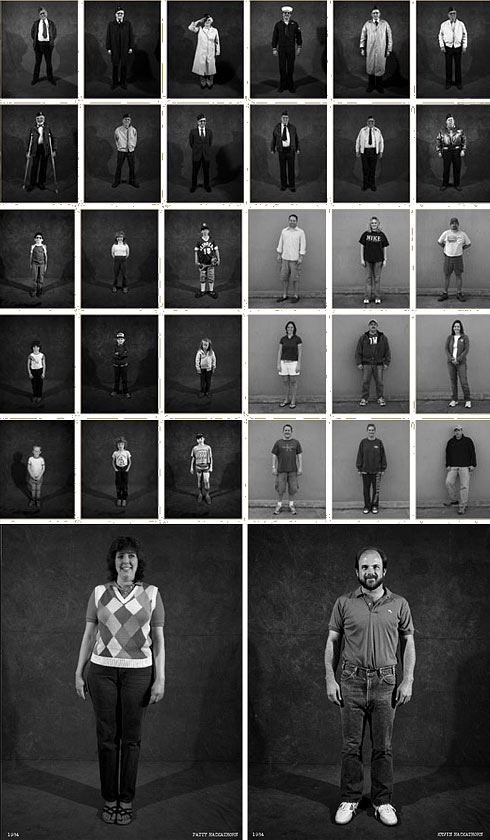
The Oxford Project began almost 25 years ago, when Peter Feldstein undertook the task of photographing every resident of his town, Oxford, Iowa (pop. 676). The collection of photographs that resulted is a fascinating glimpse into the ethos and character of small-town life.
Redesigning Craigslist
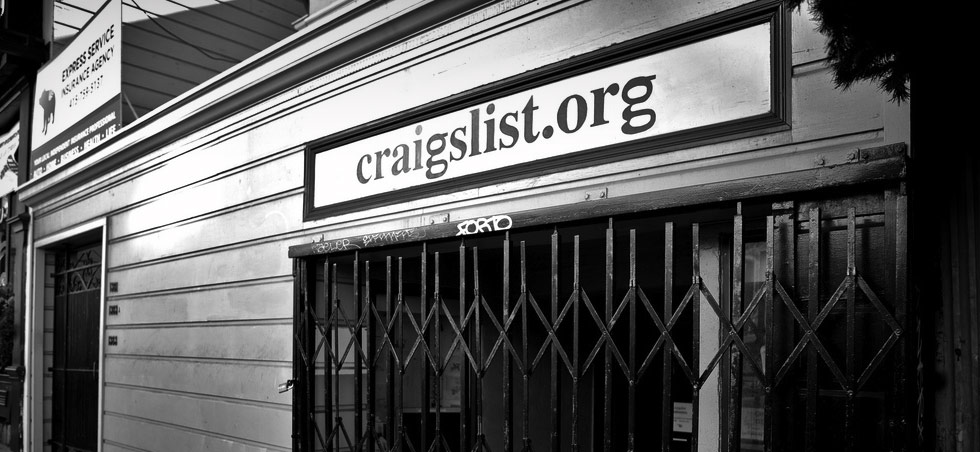
“Besides offering nearly all of its features for free, it scorns advertising, refuses investment, ignores design, and does not innovate. Ordinarily, a company that showed such complete disdain for the normal rules of business would be vulnerable to competition, but craigslist has no serious rivals. The glory of the site is its size and its price. But seen from another angle, craigslist is one of the strangest monopolies in history, where customers are locked in by fees set at zero…”
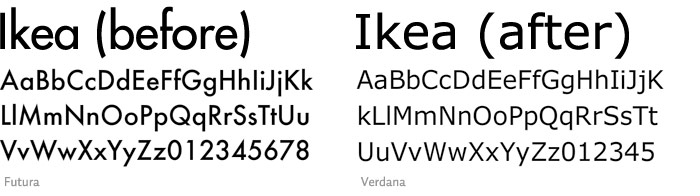
more on IKEA’s new look (for anyone who cares)
Coke: a simple story

Turner Duckworth’s redesign for Coca-Cola has won a lot of top awards over the past year: the first design Grand Prix at Cannes, a D&AD Yellow Pencil and, of course, a place in the Creative Review Annual. Some people wonder what all the fuss is about: ‘It’s just a tidying up exercise, stripping Coke back to its iconic essentials, what’s creative about that?’ they ask. But for anyone who has had to deal with a large organisation and all the political machinations that entails, Turner Duckworth’s Coke project is exemplary: it’s an all-too-rare instance of a big player doing the right thing, junking all the gratuitous visual nonsense that clutters so much FMCG packaging in favour of purity and simplicity. Some have even intimated that, so rare is it for a huge brand to buy such thoughtful design, the awards should really have gone to the client. That client is Pio Schunker.
Schunker joined Coke from the New York office of ad agency Ogilvy five years
ago to help revitalise a brand that he admits had lost its way. He now glories in the title of ‘senior vice president for creative excellence, North America’. He and his team oversee Coke’s relations with its advertising agencies and design consultancies, a roster that includes Wieden + Kennedy, Mother, Crispin Porter + Bogusky and Turner Duckworth. Schunker says that he deliberately targeted independents to work with. The big networks, he says, were just giving Coke what they thought it wanted, not what they themselves believed in. He wanted to work with agencies and design studios who would, rather than simply “stick around for the pay cheque”, believe in what they were doing and walk away if they didn’t get to do it. His views on what he wants from his partners might seem like music to the ears of our readers. He is adamant that he doesn’t want yes men, willing to do anything that the client wants, but strong -willed, committed people who are unafraid to express an opinion: “You want an agency to act as your conscience,” he says, “to say ‘that’s crap, you shouldn’t do that, we’re not doing it’. We value them far more if they value themselves – if they just become doormats we lose respect for them,” he says.
http://www.creativereview.co.uk/back-issues/creative-review/2009/august-2009/coke-a-simple-story
Blind Carbon Copy
“Blind Carbon Copy” is a sly appropriation of a day’s corporate drama. Narrative
action item: Global media conglomerate headquartered in New York City
commissions program bringing to the table ethnic diversity. Visionary program
shall jam the culture inbox, host panel discussions, culminate with cutting edge
art exhibition in midtown corporate lobby. Month of June: the Asians. Global
conglomerate enlists core competency to brain dump Asian American artists to
hang their art in beige hallways of media triumphalism. Eleventh and a half hour
division head issues the disintermediate: Shut it down.
At the end of the day refers to what happened during the day – what got dealt,
what got salvaged, what got tossed out. At the end of the day, “Blind Carbon
Copy” re- shuffles the deck to communicate an elliptical difference, even as that
difference opposes clear definable equalities. The featured works vary from
fashion photography to drawing, sculpture, graphic art and video. Much of these
artists works deploy a detachment of assimilative meaning.
Genres of ethnicity, commercial, fine art start to slope from fulfillment of
distinction to interrelations, intricacies and contradictions of meaning, a ghost
without a host gliding past various check points of identity.
Exhibition hosted by Margaret Lee
Organized by Common Space
contact: Jon Santos

Copyright © _dreams. All rights reserved.