

Archive for the ‘dreams’ category
next season
December 9th, 2008
 Evan Owen Dennis is a director, designer and illustrator residing in the Lower East Side of New York City. Find his work over at Next Season.
teach the babies
December 8th, 2008

taken from my phone camera in Dekalb ave station.
Hello baby! Hello Kitty welcomes Taiwan newborns
December 7th, 2008
YUANLIN, Taiwan (Reuters Life!) – Mommy, daddy — and Hello Kitty — welcome newborns at a cat-themed Taiwan maternity hospital that hopes the Japanese cartoon icon will ease the stress of childbirth as well as boost business.
The 30-bed Hau Sheng Hospital in Yuanlin in central Taiwan claims to be the only institution of its kind authorized by the popular cartoon cat’s parent company Sanrio Co Ltd.


The Brilliance of Creative Chaos
December 7th, 2008
Nothing is more personal than our own studio, where we generate great ideas, daydream, sing aloud etc. .. Here’s an article from BBC that links personal spaces to creative minds.
Are we able to think clearly when surrounded by mess because chaos is inherent in all our minds, even those of the great writers and thinkers, asks Clive James.
“It’s in chaos. The pontificator with plans for fixing the world can’t organise his own desk, and as for what lies beyond the desk, forget about it. The evidence that I’ve spent years forgetting about it is all out there. Piles of old newspapers and magazines. Stacks of box files containing folders containing memos about the necessity to buy more folders and box files. Hundreds of books uselessly hidden behind hundreds of other books. A small statue of a Sumo wrestler, or else a life-sized statue of a small Sumo wrestler. A bag of random receipts that my accountant might have found quite useful in their year of origin, 1998.”
Continue article at BBC
Air Force Test!
December 7th, 2008
It’s been said that the US Air Force uses this for fighter pilots. They are expected to go for at least 2 minutes. Give it a try but be careful…it is addictive!!
http://members.iinet.net.au/~
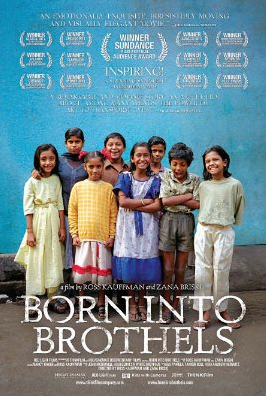
Born Into Brothels
December 7th, 2008
1998, Photographer Zana Briski, began traveling to Calcutta to photograph life in the red light district. She literally lived in the brothels for months at a time, and while the prostitutes slowly came to trust Zana, it was their children who accepted her immediately. The children didn’t quite understand what Zana was doing there, but they were fascinated by her and her camera. She let them use it and showed them how to take pictures. She thought it would be great to see this world through their eyes. It was then that she decided to start formal classes in the red light district and teach them photography. Zana thrived on teaching them and the kids eagerly captured their lives and environment through the lens of their point-and-shoot cameras. The results of their work were exhilarating. To do that, they inspired a special group of children of the prostitutes of the area to photograph the most reluctant subjects of it. As the kids excel in their new found art, the filmmakers struggle to help them have a chance for a better life away from the miserable poverty that threatens to crush their dreams.
Uniqlo: Cannes T-shirt competition
December 7th, 2008

After winning the Cannes Lions Grand Prix in 2008, UNIQLO is to produce an official T-shirt for the same Grand Prix this year. We have decided to invite people from all over the world to design a memorable T-shirt suitable for distribution at Cannes Lions 2009 awards in our Cannes Lions T-shirt Grand Prix competition.
The subject for this UNIQLO official T-shirt design competition must focus on the “lion”, the symbol of the Cannes International Advertising Festival. As long as the basic material involves the lion theme, the applicant is free to design the T-shirt however he/she wishes. 10 entries from among the submitted designs will be selected and the one entry to receive the Grand Prix. The Grand Prix winning design will be commercialized as a T-shirt for distribution to guests and members of the media at Cannes Lions 2009 next June. And, all of 10 entries will be sold in UNIQLO stores.
On Viral videos
December 6th, 2008
from http://campfirenyc.com/2006/11/09/viral/
I was once at a TV pre-production meeting and the director was going on about something or other, when the agency creative director interrupted him saying, “Let’s not beat a dead horse here.” The director shot back, “Let’s examine that proposition. What’s wrong with beating a dead horse? I mean it’s better than beating a live horse.”
I’m telling this story because of the repeated abuse of another dead horse: “Viral video.”
Let’s examine that proposition. Why do we now call any short marketing video, intended to be watched and forwarded by YouTube addicts, “Viral?” How do we know anyone will watch or forward any video so it goes “Viral?””
We don’t talk about a new film going into release as a “blockbuster” film, right? Or a just published book as a “Times bestseller” book?
So why do advertisers and agencies assume any short video tossed onto YouTube will go “Viral?”
This is not just an argument about semantics, but more importantly, methodology and effectiveness. The ad industry, for years, has made all sorts of false assumptions about TV commercials and their effectiveness; I believe the industry is now trying to apply those same mistaken assumptions to the “New Marketing.”
There are upwards of 30,000 video uploads and 40,000,000 downloads a day on the Tube. There’s no way a random video or two can be counted on to automatically go “Viral,” projecting a brand’s message. Nonetheless, we run into this misconception everyday. From lots of smart and talented people.
In the new era of consumer engagement, the real issue is what’s the big, persistently engaging campaign surrounding the video, moving the content? And what’s the big idea that drives that campaign? A video or two might be part of it (we used many in our Audi Art of the Heist campaign , but the real question is how are you engaging the audience overall so they look for your goddamn “Viral” videos?
Might this misconception be a hangover from the 30 second spot culture? Back in the day, you simply produced a spot and it went into a black box called the media department, and that black box – which created great wealth for agency networks – stuck the spot on some demo relevant shows.
If eight million people watched a show, the assumption was eight million people saw your 30 second spot. Simple. There are questions being raised now about this dead horse as well. And people began asking these questions long before “Tivo.”
It turns out that when you work in the New Marketing, a truly measurable medium with extensive metrics, and where viewer participation can be easliy judged, the old set of assumptions are no longer relevant.
I may be beating a dead horse here, but given the level of bullshit industry buzz about viral videos, I suspect not.
Erased Photographs
December 6th, 2008
Personal family snapshots erased layer by layer with a rubber eraser to expose the white base of the photo paper. The title of each piece is a memory that the photograph recalled.

That summer we were apart, we met in New York and stayed in that beautiful hotel, didn’t we?

DescIs it possible to make a photograph of New Jersey regardless of where you are in the world?
December 6th, 2008
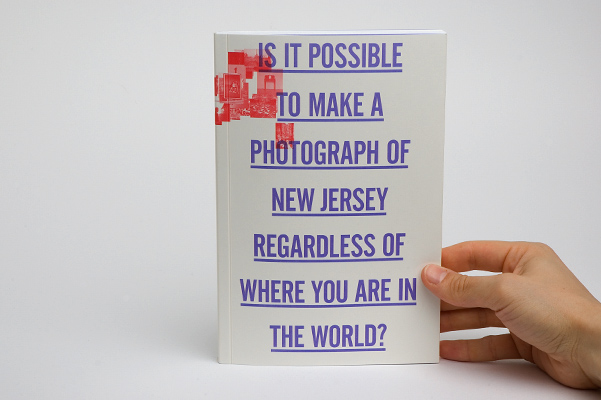
Is it possible to make a photograph of New Jersey regardless of where you are in the world? is the title of a photo exhibition curated by Laurel Ptak, raising questions on how the internet and globalization has changed our idea of place.
The layout of the catalogue and the website is inspired by the way search engines deals with visual content—images are treated without respect for visual qualities and are instead arranged based on meta data.
Apple branded apples
December 4th, 2008

An owner of a Fuji apple orchard printed up custom stickers of iPhones and the Apple logo. He then put the stickers on his Fuji apples while they were still young and on the trees.
A month later after the apples had matured, he removed the stickers. As you can see the lack of sun reaching the apple cause them to keep the stickers original design.

http://www.weirdasianews.com/2008/12/04/apples-apples-talk-geek-fruit/
Reformation and democracy
December 4th, 2008
In the American context, historians use the term Judeo-Christian to refer to the influence of the Hebrew Bible and New Testament on Protestant thought and values, most especially the Puritan, Presbyterian and Evangelical heritage. These founding generations of Americans saw themselves as heirs to the Hebrew Bible, and its teachings on liberty, responsibility, hard work, ethics, justice, equality, a sense of choseness and an ethical mission to the world, which have become key components of the American character, what is called the “American Creed.” [6]These ideas from the Hebrew Bible, brought into American history by Protestants, are seen as underpinning the American Revolution, Declaration of Independence and the United States Constitution. Other authors are interested in tracing the religious beliefs of America’s founding fathers, emphasizing both Jewish and Christian influence in their personal beliefs and how this was translated into the creation of American institutions and character. [7]
To these historians, the interest of the concept Judeo-Christian is not theology but on actual culture and history as it evolved in America. These authors discern a melding of Jewish thought into Protestant teachings – which added onto the heritage of English history and common law, as well as Enlightenment thinking - resulted in the birth of American democracy.
Fat City Reprise - Long Gone
December 4th, 2008
Directed by Cesar Kuriyama
Director of Photography Tommy Agriodimas
No Video cameras were used in the production of this music video. It was created entirely from 45,000 Photographs taken by a Nikon D200 DSLR.

Are You Prepared for The Landing?
December 2nd, 2008
Uriel, director/founder of the Unarius Educational Foundation, tells about the great upcoming spaceship landing in the year 2001.

Technical Diagrams
December 1st, 2008
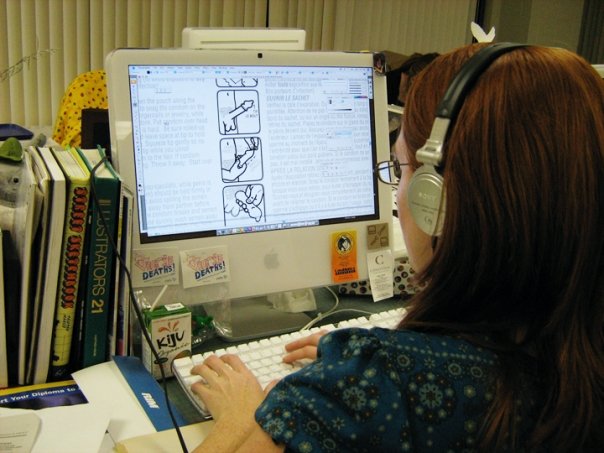
End of the semester evaluations, critiques, and exams are approaching. Amidst all the stress, it’s nice to look over at someone else’s screen and… 


Fifty People, One Question
November 29th, 2008
We asked the same question and it took us somewhere new. Gone were the lazy days of summer. A cool breeze swept the streets with leaves under foot and the familiar hustle of the city…welcome to autumn in New York.
The historical origin and political significance of the country name “China” and other variations in other language.
November 28th, 2008

Worker dies at Long Island Wal-Mart after being trampled in Black Friday stampede
November 28th, 2008

A Wal-Mart worker died early Friday after an “out-of-control” mob of frenzied shoppers smashed through the Long Island store’s front doors and trampled him, police said.
The Black Friday stampede plunged the Valley Stream outlet into chaos, knocking several employees to the ground and sending others scurrying atop vending machines to avoid the horde.
When the madness ended, 34-year-old Jdimytai Damour was dead and four shoppers, including a woman eight months pregnant, were injured.
“He was bum-rushed by 200 people,” said Wal-Mart worker Jimmy Overby, 43.
“They took the doors off the hinges. He was trampled and killed in front of me.
“They took me down, too … I didn’t know if I was going to live through it. I literally had to fight people off my back,” Overby said.
Damour, a temporary maintenance worker from Jamaica, Queens, was gasping for air as shoppers continued to surge into the store after its 5 a.m. opening, witnesses said.
Even officers who arrived to perform CPR on the trampled worker were stepped on by wild-eyed shoppers streaming inside, a cop at the scene said.
“They pushed him down and walked all over him,” Damour’s sobbing sister, Danielle, 41, said. “How could these people do that?
“He was such a young man with a good heart, full of life. He didn’t deserve that.”
Damour’s sister said doctors told the family he died of a heart attack.
His cousin, Ernst Damour, called the circumstances “completely unacceptable.”
“His body was a stepping bag with so much disregard for human life,” Ernst Damour, 37, said. “There has to be some accountability.”
Roughly 2,000 people gathered outside the Wal-Mart’s doors in the predawn darkness.
Chanting “push the doors in,” the crowd pressed against the glass as the clock ticked down to the 5 a.m. opening.
Sensing catastrophe, nervous employees formed a human chain inside the entrance to slow down the mass of shoppers.
It didn’t work.
The mob barreled in and overwhelmed workers.
“They were jumping over the barricades and breaking down the door,” said Pat Alexander, 53, of Crown Heights, Brooklyn. “Everyone was screaming. You just had to keep walking on your toes to keep from falling over.”
After the throng toppled Damour, his fellow employees had to fight through the crowd to help him, police said.
Witness Kimberly Cribbs said shoppers acted like “savages.”
“When they were saying they had to leave, that an employee got killed, people were yelling, ‘I’ve been on line since Friday morning!’” Cribbs said. “They kept shopping.”

Proudly powered by WordPress. Theme developed with WordPress Theme Generator.
Copyright © _dreams. All rights reserved.
Copyright © _dreams. All rights reserved.