On the tenets of Conceptual art
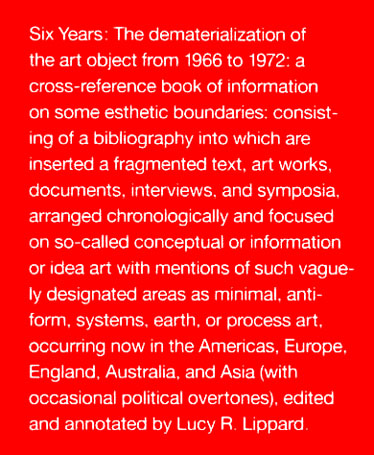
Conceptual art, for me, means work in which the idea is paramount and the material form is secondary, lightweight, ephemeral, cheap, unpretentious and/or “dematerialized.” […] Conceptual artists gloried in speeding past the cumbersome established process of museum-sponsored exhibitions and catalogues by means of mail art, rapidly edited and published books of art, and other small-is-better strategies. […] [W]e saw “ultra-conceptual art” emerging from two directions: art as idea and art as action. […] Communication (but not community) and distribution (but not accessiblity) were inherent in Conceptual art. Although forms pointed toward democratic outreach, the content did not. However rebellious the escape attempts, most of the work remained art-referential, and neither economic nor aesthetic ties to the art world were fully severed. […] Verbal strategies enabled Conceptual art to be political, but not populist. Communication between people was subordinate to communication about communication. […] For the most part communication was perceived as distribution, and it was in this area that populist desires were raised but unfulfilled. Distribution was often built into the piece. […] Decentralization and internationalism were major aspects of the prevailing distribution strategies. […] The easily portable, easily communicated forms of Conceptual art made it possible for artists working ourside the major art centers to participated in the early stages of new ideas. […] Perhaps most important, Conceptualists indicated that the most exciting “art” might still be buried in social energies not yet recognized as art.
via http://linedandunlined.com/2008/11/04/flagged-passages-2-escape-attempts/