
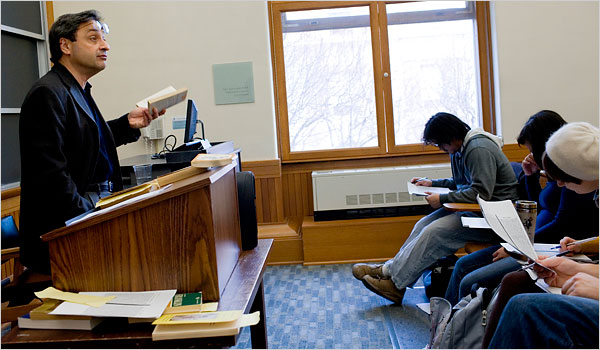
One idea that elite universities like Yale, sprawling public systems like Wisconsin and smaller private colleges like Lewis and Clark have shared for generations is that a traditional liberal arts education is, by definition, not intended to prepare students for a specific vocation. Rather, the critical thinking, civic and historical knowledge and ethical reasoning that the humanities develop have a different purpose: They are prerequisites for personal growth and participation in a free democracy, regardless of career choice.
This crisis of confidence has prompted a reassessment of what has long been considered the humanities’ central and sacred mission: to explore, as one scholar put it, “what it means to be a human being.”
http://www.nytimes.com/2009/02/25/books/25human.html?ref=opinion
To the Editor:
During my 40 years teaching European history at Trinity College, my answer to the question “What do you do with a history major?” was, “Nothing, unless you want to teach.”
The better question is, “What do history majors do?” And the answer is, “Everything — law, business, finance, medicine, journalism, politics and much more.”
To the Editor:
It is shockingly inappropriate to reduce support for the humanities when most of the problems we are faced with in the nation and the world are the result of deficiencies in integrity and ethics, not deficiencies in vocational skill sets.
To the Editor:
Your article reminded me of a sign taped to the door to the classics department in the early 1960s at Yale, where I majored in Latin: “Studying the classics teaches you the values you need to live without the money you give up because you studied the classics.”
To the Editor:
An important aspect of the humanities mentioned in your article needs to be spelled out. “Critical thinking,” many would agree, is valuable, and the humanities promote it. But what is it?
It is the ability to ask pertinent questions on any subject of human concern, recognize pertinent and defensible answers, and reject spurious or irrelevant ones. Equally, it is the habit of doing so, an intellectual virtue.
http://www.nytimes.com/2009/03/02/opinion/l02humanities.html?_r=1