
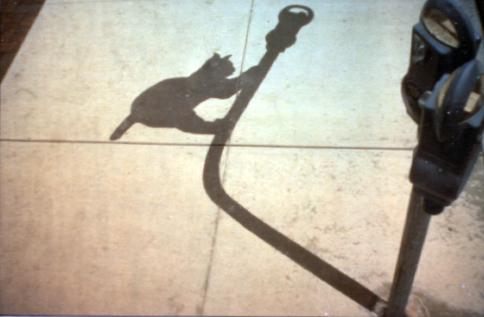
Craig Cree Stone’s energy is intellectual and playful. He challenges you conceptually, perceptually and literally but with a dollop of humor.
Stone’s sculptures, paintings and installations are more about ideas than about surface or form, although his work is nearly always beautiful. The objects are constructed according to the way they have been depicted, either in drawings, paintings or media photographs. The quixotic constructions address issues of identity on many fronts. For instance, in work done in the late 1980s. Stone assumed fictional personas to take credit for his work: Stella Jumping Eagle, Michi No Kogeni and Martin Rabinowitz, to name a few. The pieces from this era confront notions of what is identified as male or female, Native American, Asian or Jewish, while simultaneously challenging rules of visual perception by means of false shadows, mirrors and contrary use of materials. These elegant sculptures tease, all the while examining how insidiously perception and self-identification are prescribed and limited by cultural stereotyping. Stone describes a trapezoidal, footed cabinet, painted in shades of burnt sienna, aqua and blue-gray, titled Masculine Ties (Male Ritual Object), as a polychrome phalliform container for lengths of ornamental fabric worn dangling from the neck. The piece poses the question, does the tie make the man?
http://www.elcamino.edu/commadv/ArtGallery/ARCHIVES/craig_stone05/craig_stone05.html
 Now you can tag any website with customized graffiti markers and spraypaint.http://www.paintthatshitgold.com/
txtmygf is a girlfriend
maintenance service.
We text sweet, sweet nothings
from your phone to hers
so you don’t have to.
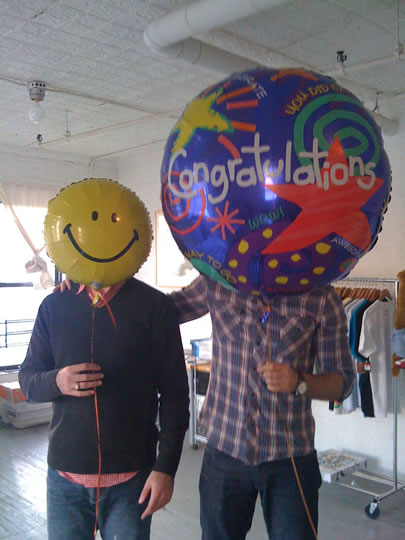
For those of you who didn’t know, I had been working on a student resource site for Dan and Andre during the past 3 months. After lots of fussing and editing, the site is finally complete! I’m really proud to be a part of this project as I had always wanted to share inspiration and resources with other passionate artists/designers (just like this blog). The site includes links to studios, inspiration, helpful videos, student work from their classes at Pratt, and a critique board which you can post work on.
I present you, Fun is Learning.
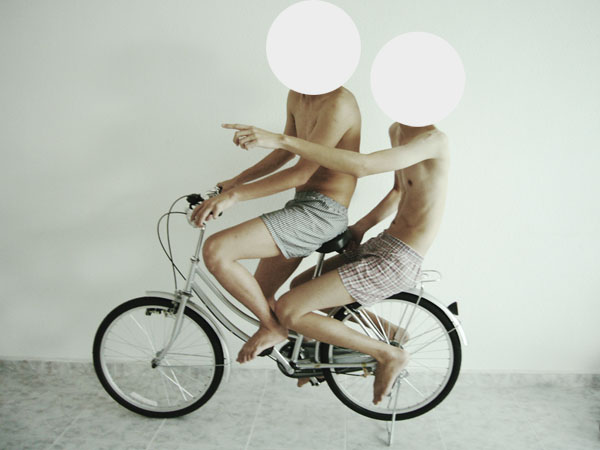
Fellow friend and designer at W+K Shanghai, also one of the finalists of W+K Seeking.
********************************
Polish :
Styczeń
Luty
Marzec (influenced by Latin but the original polish name has existed))
Kwiecień
Maj (definately from Latin - polish name has existed too)
Czerwiec
Lipiec
Sierpień
Wrzesień
Październik
Listopad
Grudzień
********************************
German
Hartung - January
Hornung - February
Lenzing - March
Ostermond - April
Wonnemond - May
Brachet - June
Heuert - July
Ernting- August
Scheiding - September
Gilbhart - October
Nebelung - November
Julmond - December
********************************
Spanish we always write the months in lower case:
enero
febrero
marzo
abril
mayo
junio
julio
agosto
septiembre o setiembre
octubre
noviembre
diciembre
********************************
Germanic languages had native name for the months of the year. Some of them were similar in large areas; others were not. They can be found at: http://www.geonames.de/months.html. However, this list does not include North Frisian. The mainland dialects have preserved the native names:
J: ismoune, literally ice month
F: biikenmoune, beacon month
M: uursmoune, spring month
A: gjarsmoune grass month
M: krülemoune flower month
J: samermoune summer month
J: foodermoune, fodder month
A: beeridmoune, harvest month
S: härfstmoune, autumn month
O: stormmoune, storm month
N: mistmoune, mist month
D: jülmoune, yule month
********************************
JANUARY - GERAR - (Latin “gelum - coldness”)
FEBRUARY - FAURAR - (Latin “Faber - Maker”)
MARCH - MARTISOR - (Latin “Mars”)
APRIL - PRIER - Aprilie - (Latin “April - April”)
MAY - FLORAR - (Latin “Floris - flower”)
JUNE - CIRESAR - (Latin “Ceresia - cherry”)
JULY - CUPTOR - (Latin “coctorium - owen”)
AUGUST - GUSTAR (Latin “gustare - to taste”)
SEPTEMBER - RAPCIUNE - Unknown
OCTOBER - BRUMAREL (Latin “bruma - little white frost”)
NOVEMBER - BRUMAR - (Latin “bruma - white frost”)
DECEMBER - UNDREA - Unknown
********************************
Welsh
January - Ionawr
February - Chwefror
March - Mawrth
April - Ebrill
May - Mai
June - Mehefin
July - Gorffenaff
Ausgust - Awst
September - Medi
October - Hydref
November - Tachwedd
December - Rhagfyr
********************************
Scottish Gaelic
January - An Faoilteach
February - An Gearran
March - An Màrt
April - An Giblean
May - An Ceitean
June - An t-Òg-mhios
July - An t-luchar
August - An Lùnasdal
September - An t-Sultain
October - An Dàmhair
November - An t-Samhain
December - An Dùbhlachd
********************************
Cornish (a Celtic language spoken in the county of Cornwall in England)
January - Mys Genver
February - Mys Whevrer
March - Mys Merth
April - Mys Ebrel
May - Mys Me
June - Mys Metheven
July - Mys Gortheren
August - Mys Est
September - Mys Gwyngala
October - Mys Hedra
November - Mys Du
December - Mys Kevardhu
(Breton is almost exactly the same)
********************************
Czech
leden
únor
březen
duben
květen
červen
červenec
srpen
září
říjen
listopad
prosinec
******************************
Mongolian
nägdügäär sar
ĥojordugaar sar
guravdugaar sar
dörövdügäär sar
tavdugaar sar
dzurgadugaar sar
doldugaar sar
najmdugaar sar
jesdügäär sar
aravdugaar sar
arvan nägdügäär sar
arvan ĥojordugaar sar
****************************
Tibetan (slightly different from English)
January - zla.daṅ.po
February - zla.gñis.pa
March - zla.gsum.pa
April - zla.bži.pa
May - zla.lṅa.pa
June - zla.drug.pa
July - zla.bdun.pa
August - zla.brgyad.pa
September - zla.dgu.pa
October - zla.bču.pa
November - zla.bču.gčig.pa
December - zla.bču.gñis.pa
*****************************
Korean
January=1월 (Il-Wol)
February=2월 (I-Wol)
March=3월 (Sam-Wol)
April=4월 (Sa-Wol)
May=5월 (O-Wol)
June=6월 (Yu-Wol)
July=7월 (Chil-Wol)
August=8월 (Pal-Wol)
September=9월 (Gu-Wol)
October=10월 (Shi-Wol)
November=11월 (Shibil-Wol)
December=12월 (Shibi-Wol)
***************************
Burmese
January - zãnáwaẏi
February - pʰepʰɔwaẏi
March - maʿ
April - epẏi
May - me
June - zũ
July - zulaĩ
August - ɔ̀gouʿ
September - seʿtĩbʰa
October - auʿtobʰa
November - nowĩbʰa
December - dizĩbʰa
****************************
Vietnamese
tháng một
tháng hai
tháng ba
tháng tư
tháng năm
tháng sáu
tháng bảy
tháng tám
tháng chín
tháng mười
tháng mười một
tháng mười hai
****************************
In Irish
Eanáir
Feabhra(Faoilleach)
Márta
Aibreán
Bealtaine
Meitheamh
Iúil
Lúnasa
Meán Fómhair
Deireadh Fómhair
Samhain
Nollaig
****************************
Chinese:
January 一月
February 二月
March 三月
April 四月
May 五月
June 六月
July 七月
August 八月
September 九月
October 十月
November 十一月
December 十二月
****************************
Japanese Month Names
月の和名の一覧
睦月(むつき)/正月(しょうがつ)
如月(きさらぎ)
弥生(やよい)
卯月(うづき)
皐月(さつき)
水無月(みなづき)
文月(ふづき)
葉月(はづき)
長月(ながつき)
神無月(かんなづき)
霜月(しもつき)
師走(しわす)/極月(ごくげつ)
****************************
In Filipino
January - Enero
February - Pebrero
March - Marso
April - Abril
May - Mayo
June - Hunyo
July - Hulyo
August - Agosto
September - Setyembre
October - Oktubre
November - Nobyembre
December - Disyembre
****************************
Dutch:
Januari - January
Februari - February
Maart - March
April - April
Mei - May
Juni - Juni
Juli - July
Augustus - August
September - September
Oktober - October
November - November
December - December
****************************
Turkish
1-Ocak
2-Şubat
3-Mart - foreign
4-Nisan
5-Mayıs - foreign
6-Haziran
7-Temmuz
8-Ağustos - foreign
9-Eylül
10-Ekim
11-Kasım
12-Aralık
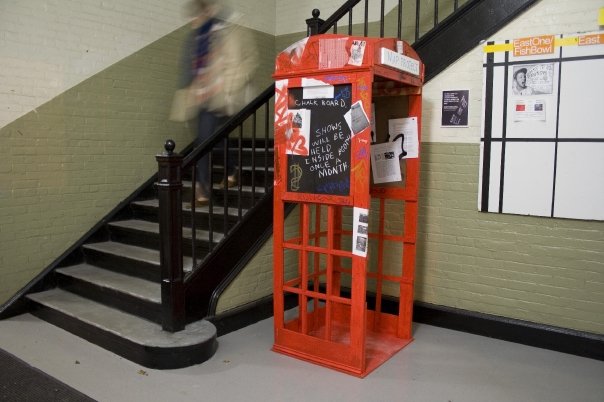
A multi-disciplinary Pratt Student exhibition
OPENING: Feb. 26 from 4:00-6:00
| Location: |
The Schafler Gallery |
| Street: |
200 Willoughby |
| City/Town: |
Brooklyn, NY |
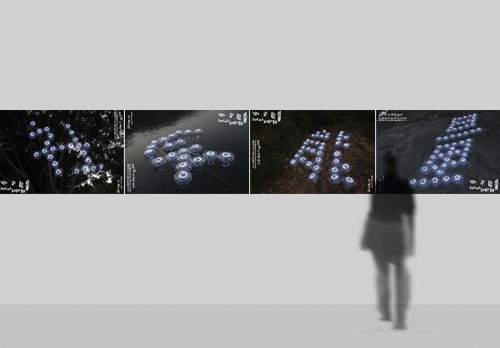
社会能量深圳站 形象海报
项目:社会能量深圳站
类别:海报
设计:SenseTeam
http://www.sensebrand.com/blog/
Arriving in Southern California on the crest of the latest dining trend sweeping through Europe, the first-ever Dining in the Dark experience is now available in Los Angeles. Just imagine that you cannot see for an hour or two, abandoning vision in exchange for a new, multi-sensual dining experience where visually-impaired servers direct you in pitch darkness. Opaque is enhancing senses of taste, smell, touch and hearing by abandoning one that we often take for granted.
http://current.com/items/76349622/dining_in_the_dark.htm
http://darkdining.com/
via Shelley Tso
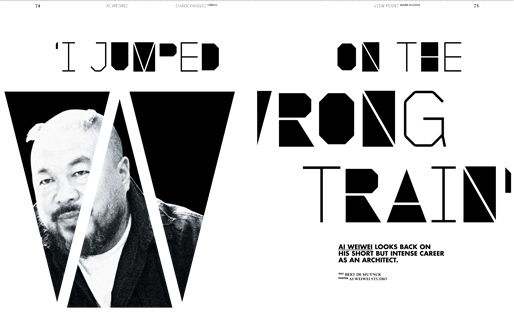
Do you think a lot of architecture has no purpose?
AW: Let’s put it this way – if there is a purpose, it’s one I don’t admire. There is too much waste, the language is often unclear, and frequently the architect’s efforts are not intelligent. Architecture is a moral-political question, not just a technical one. The desire to build is a basic instinct, a necessity if one is to survive in nature. Today architecture has become a profession taught in universities by instructors whose courses are devoted to making architecture crazy. All those students want to be stars. They are far less interested in how to survive. Architecture can be intelligent only when it’s true to its fundamental nature.
Your architectural career started with your own house.
AW: Yes, but initially I wasn’t aware of what I had done. Later, Shigeru Ban saw this house and said the only architect in China is Ai Weiwei, blah blah blah. His words made me more conscious of what I was doing. After that, many friends came asking for help. Often I said yes, because the problems I’d confronted could all be solved with basic common sense. My work doesn’t look special. It doesn’t require a great deal of special training. It’s really all about making moral and aesthetic judgements rather than technical ones. During the past seven years, we’ve done about 40 projects, including housing, landscaping, a stadium, a cultural facility, a bar and a restaurant. If it can be called ‘architecture’, we do it.
Would you say the design of your house is fundamental?
AW: I’d call it ‘essential’, because I used minimal materials to create a maximal volume. It has a very practical layout and not much interior design. The architectural language isn’t trendy. Maybe it’s become trendy because you live in it. It has become fashionable, and it’s been copied in this area. When it was being constructed, however, the farmers who helped build it thought it wasn’t finished. They didn’t understand why I didn’t want any interior design. I had to tell them I’d run out of money.
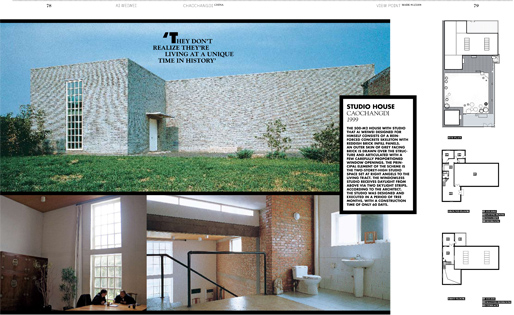
How would you describe your architecture? Do you talk about style?AW: No, I don’t talk about style, but if you deny all styles, your style emerges anyway. My style is to reduce all superfluous effort – to do the work in an essential and necessary way. In discussing my projects, people use terms like ‘minimalism’ and ‘purity’, which are incorrect. The work is essential, and the results are rooted in that essentiality.
Speaking as both artist and architect, what are your thoughts on contemporary China?
AW: Currently China is at a stage I would call the most extreme condition that humans can experience. Culturally, though, this condition is like a desert absolutely lacking in new philosophies, new morals, new aesthetics – all the aspects that should accompany the kind of activities taking place. It’s a sad story and one I often talk about, but nobody else seems to be discussing these matters. And that’s disturbing. Chinese architects are simply blind or mentally retarded in some way. They don’t realize they’re living at a unique time in history. There is no intellectual discussion, no meaningful practice. I wrote a few articles on how architects should change and be more conscious of what they’re doing, urging them to make work that addresses the current state of affairs – to consider density, speed, scale and unfamiliar building regulations. Only then can a meaningful new architecture be realized. It’s wrong to make an incorrect analysis of Western architecture or to simply copy Western buildings.

“I love you” Teddy bear
2002
Zagreb, Croatia
„I love you“ – WHAT A LIE! LIES, DAMN LIES! Yes, it’s like that when you are young, naïve and in love. And you don’t realize your boyfriend started dating you just because he wanted to take you to bed! I got this teddy bear for Valentine’s. He survived on top of my closet in a plastic bag, because it wasn’t him who hurt me, but the idiot who left him behind.
A museum dedicated to broken hearts has been founded in Croatia. Authors of the concept Olinka Vištica and Drazen Grubišić decided to set up the museum after consoling friends over their failed romances.
The Museum of Broken Relationships is an art concept which proceeds from the assumption that objects possess integrated fields - ‘holograms’ of memories and emotions - and intends with its layout to create a space of ‘secure memory’ or ‘protected remembrance’ in order to preserve the material and nonmaterial heritage of broken relationships.
Unlike the ‘destructive’ self-help instructions for recovery from failed loves, the Museum offers every individual the chance to overcome the emotional collapse through creation - by contributing to the Museum’s collection. The individual gets rid of ‘controversial objects’, triggers of momentarily ‘undesirable’ emotions, by turning them into museum exhibits, and thereby participating in the creation of a preserved collective emotional history.
The museum has everything from romantic and touching letters to different gifts given to lovers like teddy bears and photos, but also such unusual examples as leg prosthesis donated by a war veteran who fell in love with his physiotherapist or a gall stone. Every single object on display is anonymous, and has a description / story related to the relationship that was behind. After the success of the first display in Zagreb this unique museum is touring the world.
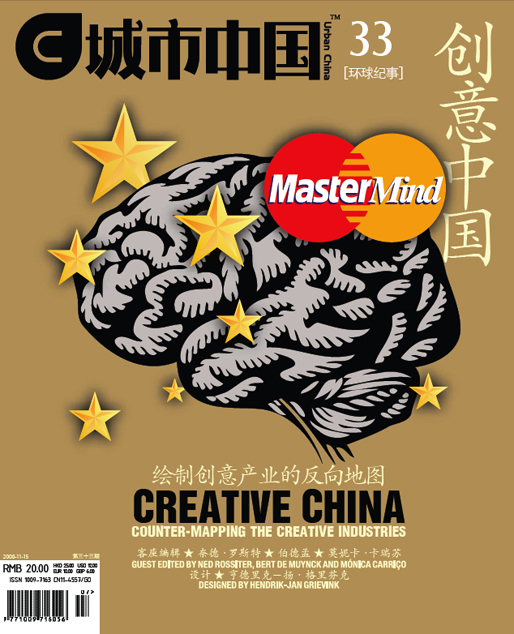
Urban China#33 is out! The special ‘Creative China: Counter-Mapping the Creative Industries’ issue was guest-edited by Mónica Carriço, Bert de Muynck and Ned Rossiter; and designed by Hendrik-Jan Grievink.
The magazine is in Chinese (with select texts published in English). An overview, including all texts in English, is available at our project website: OrgNets.net. Also visit the Urban China#33-page on MovingCities for a summary of the content and background to this issue.
By Jiang Jun
Culture & Science
Among the Four Great Inventions of ancient China – Gunpowder, Paper, Printing and the Compass Sinan – a fundamental difference exists that most people are unaware of: while gunpowder and the compass sinan are inventions of science and technology, paper and print technologies largely belong to the realm of culture. In other words, while the former two inventions lay stress on terrestrial and naval rights, the latter two share an intimacy with cultivation and absorption into everyday life. The tendency for these Four Great Inventions to be associated with political governance and military achievement has polarized debates on the periodization of civilization and modalities of creative forms according to divisions between the East and West.
Planning & Market
Because of the centralized monopoly of ‘creation rights’, the Planned Economy restrained individual initiatives with regard to independent innovation. At the same time, state-determined forms of specialization are highly restrictive when it comes to transversal flows between different institutions, cultural practices, epistemological interests and business practices. Indeed, the governmental division of sectors restricts inter-industrial blending, and the inflexibility of the dominant industrial system is hostile to flexible transformation (which, paradoxically, is also the precondition of neoliberal, post-Fordist economies). Combined, these forces are opposed to mobility, cross-fertilization and the unforeseen potential of creativity. On the other hand, although creativity is remarkably adaptable to changing environmental conditions, the market does not function especially well as the catalyst of cultural innovation. The over-specialization and division that underscores market competition tends to consign the outputs of creative practice as generic and trivial. However, the mechanisms through which markets select the latest developments results in little more than ‘renovation’ of already existing forms, based largely on symbolic content – how the ‘object’ is advertised – without any essential alteration. The convergence of Planning and Market registers precisely the polarization of ‘creativization of industry’ and the ‘industrialization of creativity’.
Foreign-oriented & Self-renovation
Developing over the 30 years of reform and process of opening-up, and in an export-oriented economy specializing in single products and parts, ‘Made in China’ performs in quite an ordinary way in terms of product innovation. However, it is amazing and dazzling in terms of the scale, diversification and flexibility of industry, which can be understood as the stage of primitive accumulation for ‘Created in China’. Establishing the conditions for the economization of culture – embodied by the architecture of intellectual property regimes – the move to ‘Created in China’ is notable for the conventions and regulations by which knowledge is not ‘open’ so much as constrained by the borders of control. Progressive technologies both fail and flourish, either through silent submission or wilfull refusal. Paradoxically, ‘Made in China’ can be viewed retrospectively as potentially creative because its limits inspired instances of virtuous self-education precisely despite the unsupportive and frequently punitive social circumstances. With the help of ‘Creative Commons’ and the ‘Learn and Practice’ spirit of Copyleft and open source movements, acts of creative liberation have continued in the face of increasing regulation of inventive practices since China’s entry into the WTO in 2001. More than anything, an in-built understanding of creativity is without doubt the inherent mechanism that drives Chinese enterprises from being export-oriented to independently driven.
Industry & Space
If one cares to look with precision into the cultural industries, the flexibility and cross-pollination of creativity condition the possibility for a more extensive context for ‘Creative Industries’. The concept of ‘multi-dimensional creativity’ should become the default for think-tanks wishing to traverse disciplinary and organizational borders. Such a mode of engagement should be able to integrate knowledge from various fields so as to diagnose and plan industrial development, offering targeted plans for new modes of work and mechanisms with which to explore creative production. The need for creative reflection destines its absence from a conventional environment, and only the comprehensive cultural context can be the incubator of lower-technical but higher-reflective creativity. Culture presents its complexity in even more unquantifiable ways than science and technology. The creative city brings culture, the element once located at the periphery of economic development, back to the core of metropolitan values, and conversely shifts the more attractive and energetic cultural capital into more sustainable and internal economic capital. In so doing, the modern city once kidnapped by the obsessions of power and capital regains its freedom thereafter.
Bio
Jiang Jun, designer and critic, has been working on urban research and experimental study, exploring the interrelationship between design phenomenon and urban dynamic. He founded Underline Office in Guangzhou in 2003, and has been the editor-in-chief of Urban China Magazine since the end of 2004, and is currently working on the book Hi-China. He is the translator of Tony Godfrey’s Conceptual Art, and Rem Koolhaas’ Bigness and Junkspace. He also teaches at Guangzhou Academy of Fine Arts.
movingcities is a Beijing-based think-thank investigating the role that architecture and urbanism play in shaping the contemporary city.
While some cities, like Beijing, developed very much along the lines of canonical forms of the classical imperial city, other cities, like Shanghai, never were of that status. One answer to your question stems from the level you are looking at it: East vs. west, Japan vs. China, and in what flavor: is it about pure morphology, building type and so forth. The Chinese city can be analyzed from different perspectives, from something quite similar to what we know in the West up to something that is absolutely unique. My own point of view is that when you look at the middle level, there are probably enough distinguishing features suggesting outcomes that are East Asian in their complexion but not necessarily Chinese.
“These are the compilation images Rosie and i have done together. Every Sunday Rosie takes an image in England and i take one in America, and we put ourselves together, even if it is just in a photo.”
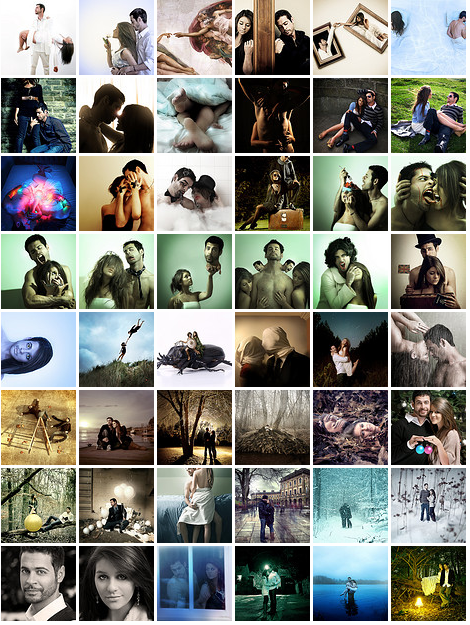
Love separated by an ocean.
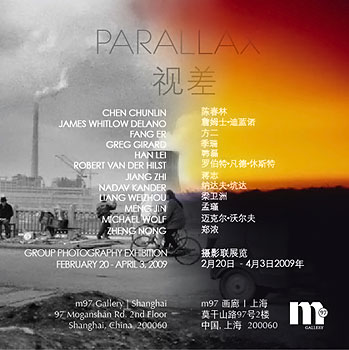
m97 Gallery Shanghai is pleased to present “Parallax”, a group exhibition of photographic works by m97 gallery artists Chen Chunlin, James W. Delano, Fang Er, Greg Girard, Han Lei, Robert van der Hilst, Jiang Zhi, Nadav Kander, Liang Weizhou, Meng Jin, Michael Wolf, and Zheng Nong. Parallax is the effect whereby the distance between two objects appears to change when viewed from different vantage points. The “Parallax” exhibition places together two or more works by each artist from different times in their careers. By juxtaposing photographs of different size, subject matter, and period of creation, this simple and direct construct enables a viewer to see how the artist’s oeuvre, and the world, has changed, remained constant, and been transformed over time.

WARRINGTON (AFP) – A train station has erected a no kissing sign to stop lovers going full steam ahead with their over-amorous farewells.
Commuters have been told: if you want to get up to that kind of business, do it in the car park.
The sign has gone up at the drop-off point at Warrington Bank Quay station in the town of Warrington, between Liverpool and Manchester.
A man in a hat and a woman with a curly-looking hair-do puckering up show people where they cannot get down to some full-on lip-locking before boarding the 07:22 to Llandudno.
A similar kissing permitted sign has also been erected in a zone where smooching is considered tolerable.
“We have not banned kissing in the station,” insisted a spokesman for operators Virgin Rail.
“But we have put the sign up at the drop off point because it is not a very big area and it often gets busy with lots of traffic.
“The sign is a light-hearted way of getting people to move on quickly.

by Li Po
A pot of wine amidst the flowers,
Alone I drink sans company.
The moon I invite as drinking friend,
And with my shadows we are three.
The moon, I see, she does not drink,
My shadow only follows me:
I’ll keep them company a while
For spring’s the time for gayety.
I sing: the moon she swings her head;
I dance: my shadow swells and sways.
We sport together while awake,
While drunk, we all go our own ways.
An eternal, speechless trio then,
Till in the clouds we meet again!
“Aub! How much is nine times seven?”
Aub hesitated a moment. His pale eyes glimmered with a feeble anxiety.
“Sixty-three,” he said.
Congressman Brant lifted his eyebrows. “Is that right?”
“Check it for yourself, Congressman.”
The congressman took out his pocket computer, nudged the milled edges twice, looked at its face as it lay there in the palm of his hand, and put it back. He said, “Is this the gift you brought us here to demonstrate. An illusionist?”
“More than that, sir. Aub has memorized a few operations and with them he computes on paper.”
“A paper computer?” said the general. He looked pained.
“It’s amazing when you think of it,” said Adell. His broad face had lines of weariness in it, and he stirred his drink slowly with a glass rod, watching the cubes of ice slur clumsily about. “All the energy we can possibly ever use for free. Enough energy, if we wanted to draw on it, to melt all Earth into a big drop of impure liquid iron, and still never miss the energy so used. All the energy we could ever use, forever and forever and forever.”
Lupov cocked his head sideways. He had a trick of doing that when he wanted to be contrary, and he wanted to be contrary now, partly because he had had to carry the ice and glassware. “Not forever,” he said.
“Oh, hell, just about forever. Till the sun runs down, Bert.”
“That’s not forever.”
http://downlode.org/Etext/last_question.html

http://pratt-comd.com/index.php
did any of you Pratt folks know about this site??? I never knew it existed.
Website by Michael Gerbino and Tom Keenoy
In 1951, when I sold my first story, I had no idea that such fundamental issues could be pursued in the science fiction field. I began to pursue them unconsciously. My first story had to do with a dog who imagined that the garbagemen who came every Friday morning were stealing valuable food which the family had carefully stored away in a safe metal container. Every day, members of the family carried out paper sacks of nice ripe food, stuffed them into the metal container, shut the lid tightly — and when the container was full, these dreadful-looking creatures came and stole everything but the can. Finally, in the story, the dog begins to imagine that someday the garbagemen will eat the people in the house, as well as stealing their food. Of course, the dog is wrong about this. We all know that garbagemen do not eat people. But the dog’s extrapolation was in a sense logical — given the facts at his disposal. The story was about a real dog, and I used to watch him and try to get inside his head and imagine how he saw the world. Certainly, I decided, that dog sees the world quite differently than I do, or any humans do. And then I began to think, Maybe each human being lives in a unique world, a private world, a world different from those inhabited and experienced by all other humans. And that led me wonder, If reality differs from person to person, can we speak of reality singular, or shouldn’t we really be talking about plural realities? And if there are plural realities, are some more true (more real) than others? What about the world of a schizophrenic? Maybe, it’s as real as our world. Maybe we cannot say that we are in touch with reality and he is not, but should instead say, His reality is so different from ours that he can’t explain his to us, and we can’t explain ours to him. The problem, then, is that if subjective worlds are experienced too differently, there occurs a breakdown of communication… and there is the real illness.
So I ask, in my writing, What is real? Because unceasingly we are bombarded with pseudo-realities manufactured by very sophisticated people using very sophisticated electronic mechanisms. I do not distrust their motives; I distrust their power. They have a lot of it. And it is an astonishing power: that of creating whole universes, universes of the mind. I ought to know. I do the same thing. It is my job to create universes, as the basis of one novel after another. And I have to build them in such a way that they do not fall apart two days later. Or at least that is what my editors hope. However, I will reveal a secret to you: I like to build universes which do fall apart. I like to see them come unglued, and I like to see how the characters in the novels cope with this problem. I have a secret love of chaos. There should be more of it. Do not believe — and I am dead serious when I say this — do not assume that order and stability are always good, in a society or in a universe. The old, the ossified, must always give way to new life and the birth of new things. Before the new things can be born the old must perish. This is a dangerous realization, because it tells us that we must eventually part with much of what is familiar to us. And that hurts. But that is part of the script of life. Unless we can psychologically accommodate change, we ourselves begin to die, inwardly. What I am saying is that objects, customs, habits, and ways of life must perish so that the authentic human being can live. And it is the authentic human being who matters most, the viable, elastic organism which can bounce back, absorb, and deal with the new.