
Archive for the ‘dreams’ category
OMD - 宋 / song
项目_ 宋 / song
类型_ 字体、杂志、海报 / 2003


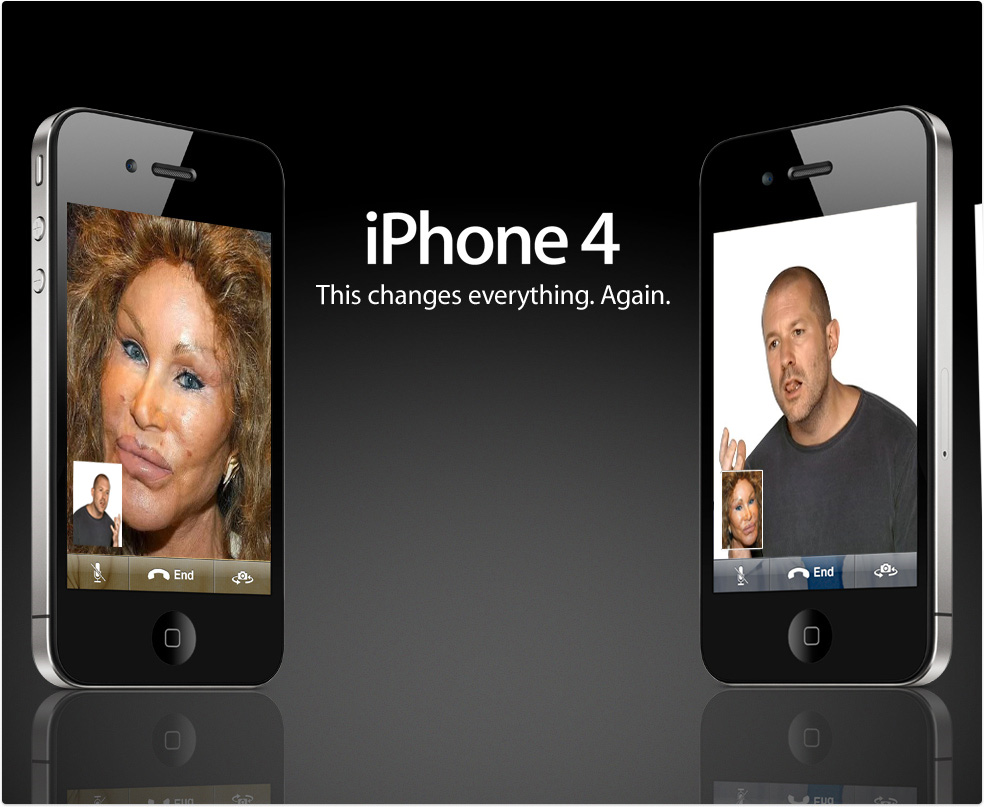
宋 体是一种具有美丽名字的中国字体。宋体横细竖粗,如将细横减去,文字需要辨认,但又可轻易识别。在此展现的是我们进行的宋体研究与其他拓展项目:《浙东文 化》是文博协会的一本杂志,大致是关于文化、考古与博物馆方面的内容。我们创造了这种消失了横划的宋体作为它的品牌,这种新的字体借助于观众的想象空间, 由于格式塔(Gestalt)完形原理,观众在观看时会自己在大脑中去填补其消失的部分。它展示了远古文化的特性,以及考古工作是借助还原与猜测文化的消 失部分的这一特点。其他拓展项目处理方式同理。
摄影:科达
Poster and typeface for “Eastern Zhejiang Culture” magazine. “Eastern Zhejiang Culture” is a magazine of the Culture Relic and Museum Association. Therefore, I created a brand-new typeface by delete the horizontal strokes of the SONGTI. This new font will strengthen the image space for audience. The audience can fill the lack parts of with GESTALT. It show the characteristics of age-old culture and express the speciality of archeology which is engaged in deoxidizing and guessing the part of lost culture.
Fumi Mini Nakamura

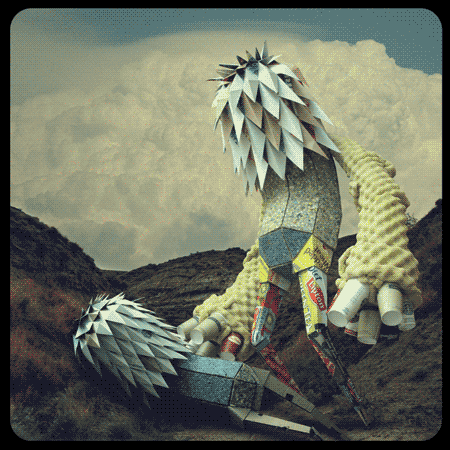
My name is Fumi Mini Nakamura.
I was born in December 1984 in the small town called Shimizu, Shizuoka, Japan. I grew up surrounded by beautiful mountains and ocean, what childhood it was!
Then I moved to the United States when I was almost twelve years old with my mother and brother. I spent my middle school to college years in beautiful Northern California. Graduated San Jose State University with BFA Pictorial Arts degree in 2007 Fall.
Currently active as freelance illustrator / designer in New York City area.
CAPTCHA Code Art
Are you human? from GDFB.tv on Vimeo.
The Institute of Social Hypocrisy
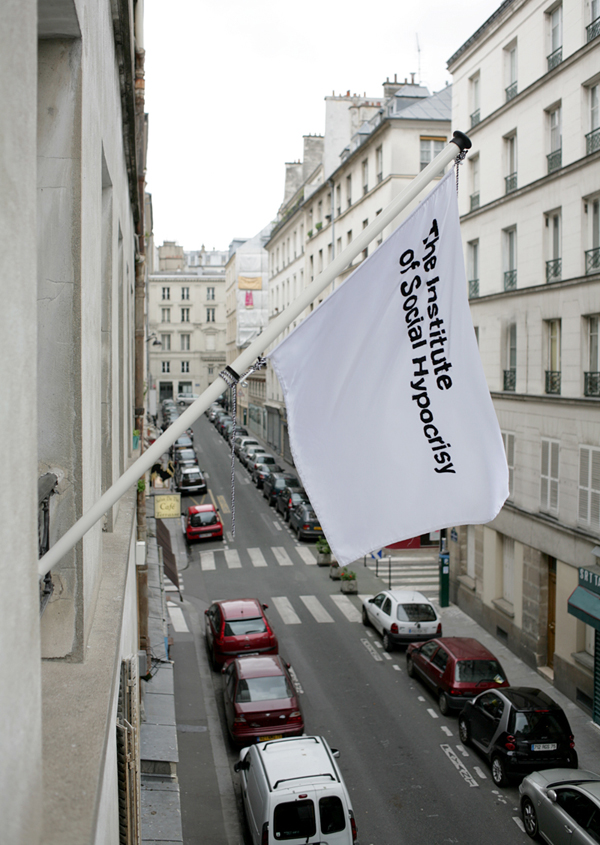
The Institute of Social Hypocrisy is an artificial organization that fronts an artist-led project, run by the artist Victor Boullet in the centre of Paris. The ISH is conducted in the form of a protracted performance piece and its very existence is brought about by inviting collaboration with other participants.
Each player and event contributes vital information and connections that allow the Institute to progress.
The ISH provides a perception of authority and thus acts as a Trojan horse; it permits the contributors to covertly infiltrate organizations and to gain access people that they might not normally be able to approach.
The accepted paraphernalia that symbolize an official structure also represent The Institute. Door plaques, headed paper, business cards and a flag combine to present an authoritative façade that conceals the true internal activity.
The fundamental theme recurring in Victor Boullet’s work is that of alienation and acceptance. He highlights the aspects of intrinsically hypocritical social behaviour used to ingratiate oneself with others. This sense of exclusion, and the subsequent desire to put up an illusion of conformity, functions as the point of departure for the activities taking place within the ISH.
The Institute combines these two connected aspects, of simulated bureaucracy and hypocrisy to form a conceptual umbrella under which a programme of related events can take place. It provides a structure for artists to take control of the programming and direction of their work and to be responsible for the events, installations and publications that will culminate in the creation of the history of The Institute of Social Hypocrisy.
Facebook and its privacy problems
Facebook CEO Mark Zuckerberg and his company are suddenly facing a big new round of scrutiny and criticism about their cavalier attitude toward user privacy.An early instant messenger exchange Mark had with a college friend won’t help put these concerns to rest.
According to SAI sources, the following exchange is between a 19-year-old Mark Zuckerberg and a friend shortly after Mark launched The Facebook in his dorm room:
Zuck: Yeah so if you ever need info about anyone at Harvard
Zuck: Just ask.
Zuck: I have over 4,000 emails, pictures, addresses, SNS
[Redacted Friend’s Name]: What? How’d you manage that one?
Zuck: People just submitted it.
Zuck: I don’t know why.
Zuck: They “trust me”
Zuck: Dumb fucks.
Brutal.
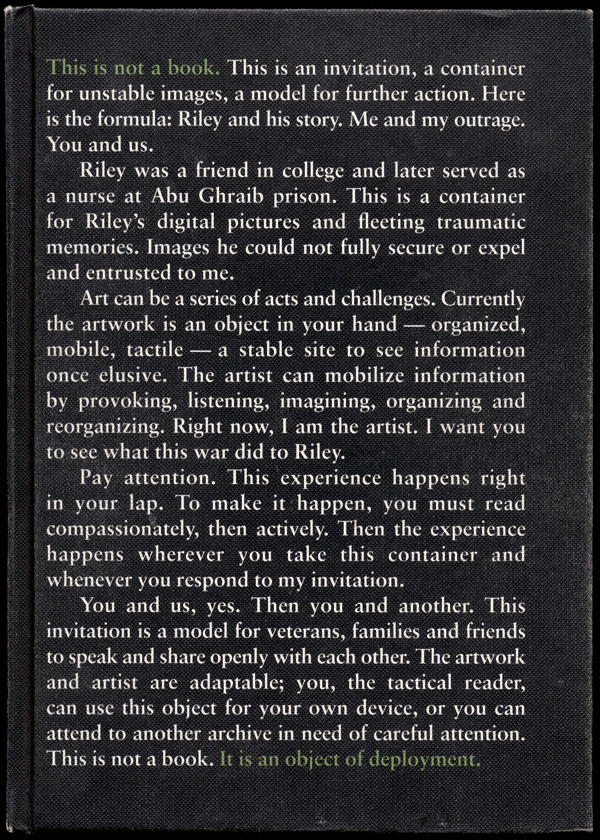
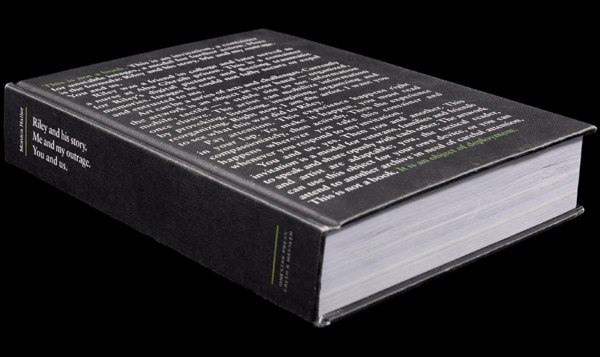
Riley and his story
http://www.rileyandhisstory.com/
Riley and his story. is the result of a collaboration Monica Haller initiated with Iraq war veteran, Riley Sharbonno. It combines text from their conversations over three years with his images from combat.
Here, the camera is a prosthetic devise. It serves as a witness to events that make us want to turn away. We begin with images rejected or repressed in the consciousness of Riley Sharbonno, an Iraq War combat veteran.
Riley has pictures that he doesn’t remember taking, nor does he remember the event itself. Riley looks at these images upon his return home, as if for the first time. He looks at them for the first time along side us, other U.S. citizens; how does that implicate us as witnesses?
Digital data storage holds evidence of the past for possible future recognition. Here we are now. What stories do we tell ourselves, our families, our friends?
The digital archive picturing the Iraq War is ever expanding. Official network media and user generated websites are “refreshed” daily. The ever-expanding archive is ubiquitous and ephemeral. It is also evasive; massive amounts of unedited digital information make it hard to access. Pause to make meaning. Confront this archive, your archive. Manage a narrative that makes sense.
This project is about what a book is, what reading is, what interacting with images is. How a book is deployed, disseminated, and staged all change the way it is used. Evolving technologies, or redeploying of old technologies, changes the way information is received.
What does it mean to offer this digital archive between the two covers of a book? Will the reader focus? Turn off her cell phone? Pay close attention? How does a stable, physical object both limit and liberate actual human experience?
Can such a book mobilize a reader? Can that reader move another reader?
Published by onestar press and Fälth & Hässler
WOOG Interview @ Zoom Magazine
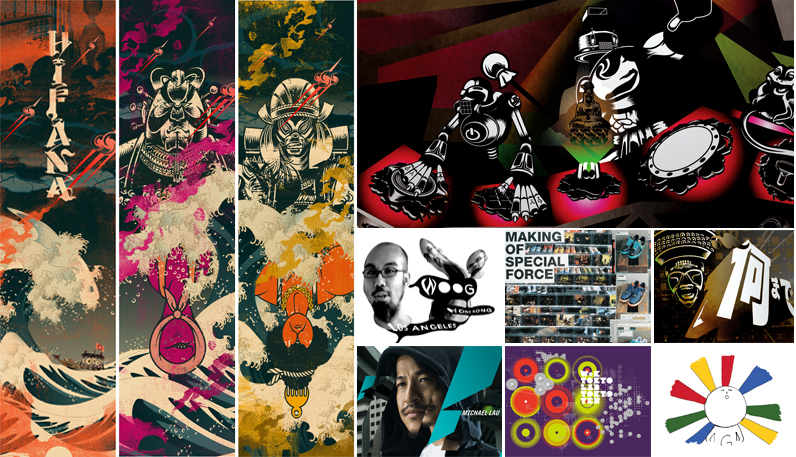
Woog is an art director, designer, typographer, illustrator and artist. Born in Hong Kong, Woog, a.k.a Woo Kung Tai Gino, grew up in the New Romantic 80’s aspiring to be a DJ, but became a graphic painter instead. Half way out of his DJ closet, these days he mostly scratches with his pencil, painting with type and creating orgasmic images that draw from his heritage, identity and memory. He is currently working at Wieden+Kennedy Shanghai.
Recognition includes Cannes Cyber Lion, AIGA, ADC NY, American Illustration, ONE Show gold and silver, D+AD, RESFEST, and ONEDOTZERO.
Prior to W+K Shanghai, he worked at W+K Tokyo, Imaginary Forces, Paul Mcmenamin / v23, Neville Brody’s Research Studios and taught at Temple University / Tyler School of Art. He received his BFA in Graphic Design at Art Center College of Design.
http://www.zoommag.jp/zoom03.html
http://www.zoommag.jp/zoom03/index_en.html
Project M in Germany

1. Your name
2. Your phone number
3. A link to your website
4. A link to your video
Don’t forget: Your video should be no longer than
60 seconds and should look nothing like the ones you’ve just seen. Make it legendary.
Project M is a program for young creative people who are already inspired to contribute to the greater good, and are looking for a platform to collaborate and generate ideas and projects bigger then themselves. Project M is that platform.
Project M will encourage and provide techniques for thinking wrong as a way to generate new ideas and design directions. The human brain tends to think along predetermined linear thought pathways. Such linear thinking can inhibit true innovation and creative exploration.
Project M is not a school and has no tuition. Every attending person will share the expenses of funding Project M. The expenses will be $2000 each. Some M’ers have been very creative about raising this amount. You should be too.
Applications are due on July 15th, 2010.
More detailed logistics and procedures to follow upon acceptance. Questions? Call, write or email.
e: john@c2llc.com // p: 207.323.0792 //
25 Congress Street // Belfast, ME 04915
Old and New computers
I need to talk to you about computers. I’ve been on a veritable roller-coaster of “how I feel” about the iPad announcement, and trying not to write about it until I had at least an inkling of what was at the root of that.
Before we begin, a reminder: On this blog, I speak only for myself, not for my company or my co-workers.
The thing is, to talk about specific hardware (like the iPad or iPhone or Nexus One or Droid) is to miss entirely the point I’m about to try to make. This is more important than USB ports, GPS modules, or front-facing cameras. Gigabytes, gigahertz, megapixels, screen resolution, physical dimensions, form factors, in fact hardware in general — these are all irrelevant to the following discussion. So, I’m going to try to completely avoid talking about those sorts of things.
Let’s instead establish some new terminology: Old World and New World computing.
Introduction
Personal computing — having a computer in your house (or your pocket) — as a whole is young. As we know it today, it’s less than a half-century old. It’s younger than TV, younger than radio, younger than cars and airplanes, younger than quite a few living people in fact.
In that really incredibly short space of time we’ve gone from punchcards-and-printers to interactive terminals with command lines to window-and-mouse interfaces, each a paradigm shift unto themselves. A lot of thoughtful people, many of whom are bloggers, look at this history and say, “Look at this march of progress! Surely the desktop + windows + mouse interface can’t be the end of the road? What’s next?”
Then “next” arrived and it was so unrecognizable to most of them (myself included) that we looked at it said, “What in the shit is this?”
The Old World
In the Old World, computers are general purpose, do-it-all machines. They can do hundreds of thousands of different things, sometimes all at the same time. We buy them for pennies, load them up to the gills with whatever we feel like, and then we pay for it with instability, performance degradation, viruses, and steep learning curves. Old World computers can do pretty much anything, but carry the burden of 30 years of rapid, unplanned change. Windows, Linux, and Mac OS X based computers all fall into this category.
The New World
In the New World, computers are task-centric. We are reading email, browsing the web, playing a game, but not all at once. Applications are sandboxed, then moats dug around the sandboxes, and then barbed wire placed around the moats. As a direct result, New World computers do not need virus scanners, their batteries last longer, and they rarely crash, but their users have lost a degree of freedom. New World computers have unprecedented ease of use, and benefit from decades of research into human-computer interaction. They are immediately understandable, fast, stable, and laser-focused on the 80% of the famous 80/20 rule.
Is the New World better than the Old World? Nothing’s ever simply black or white.
Floppy Disks
An anecdote: When the iMac came out, Apple drew a line in the sand. They said: we are no longer going to ship a computer with a floppy disk drive. The entire industry shit its pants so loudly and forcefully that you probably could have heard it from outer space.
Are you insane? I spent all this money on a floppy drive! All my software is on floppy disks! You’ve committed brand suicide! Nobody will stand for this!
Fast-forward to today. I can’t think of a single useful thing to do with a floppy disk. I can go to the supermarket and buy a CD, DVD, or flash drive that is faster, smaller, and stores 1,000 times as much data for typically less than a box of floppies used to cost. Or better still, we can just toss things to each other over the network.
To get there, yes, we had to throw away some of our investment in hardware. We had to re-think how we did things. It required adjustment. A bit of sacrifice. The end result, I think we can all agree regardless of what platform we use, is orders of magnitude more convenient, easier to use, and in line with today’s storage requirements.
Staying with floppies would have spared us the inconvenience of that transition but at what long-term cost?
Nothing is ever simply black or white. There was a cost to making the transition. But there was a benefit to doing so.
To change was not all good. To stay put was not all bad. But there was a ratio of goodness-to-badness that, in the long run, was quite favorable for everyone involved. However in the short term it seemed so insurmountable, so ludicrous, that it beggared the belief of a large number of otherwise very intelligent people.
For a species so famous for being adaptable to its environment, we certainly abhor change. Especially a change that involves any amount of money being spent.
Cars
John Gruber used car transmissions for his analogy, and it’s apt. When I learned to drive, my dad insisted that I learn on a manual transmission so I would be able to drive any car. I think this was a wise and valuable thing to do.
But even having learned it, these days I drive an automatic. Nothing is black and white — I sacrifice maybe a tiny amount of fuel efficiency and a certain amount of control over my car in adverse situations that I generally never encounter. In exchange, my brain is freed up to focus on the the road ahead, getting where I’m going, and avoiding obstacles (strategy), not the minutiae of choosing the best possible gear ratio (tactics).
Is a stick shift better than an automatic? No. Is an automatic better than a stick? No. This misses the point. A better question: Is a road full of drivers not distracted by the arcane inner workings of their vehicle safer? It’s likely. And that has a value. Possibly a value that outweighs the value offered by a stick shift if we aggregate it across everyone in the world who drives.
Changing of the Guard
When I think about the age ranges of people who fall into the Old World of computing, it is roughly bell-curved with Generation X (hello) approximately in the center. That, to me, is fascinating — Old World users are sandwiched between New World users who are both younger and older than them.
Some elder family members of mine recently got New World cell phones. I watched as they loaded dozens of apps willy-nilly onto them which, on any other phone, would have turned it into a sluggish, crash-prone battery-vampire. But it didn’t happen. I no longer get summoned for phone help, because it is self-evident how to use it, and things just generally don’t go wrong like they used to on their Old World devices.
New Worlders have no reason to be gun-shy about loading up their device with apps. Why would that break anything? Old Worlders on the other hand have been browbeaten to the point of expecting such behavior to lead to problems. We’re genuinely surprised when it doesn’t.
But the New World scares the living hell out of a lot of the Old Worlders. Why is that?
The Needs of the Few
When the iPhone came out, I was immediately in love, but frustrated by the lack of an SDK. When an SDK came out, I was overjoyed, but frustrated by Apple’s process. As some high-profile problems began to pile up, I infamously railed against the whole idea right here on this very blog. I announced I was beginning a boycott of iPhone-based devices until changes were made, and I certainly, certainly was not going to buy any future iPhone-based products. I switched to various other devices that were a bit more friendly to Old Worlders.
It lasted all of a month.
For as frustrated as I was with the restrictions, those exact same restrictions made the New World device a high-performance, high-reliability, absolute workhorse of a machine that got out of my way and just let me get things accomplished.
Nothing is simply black or white.
Old Worlders are particularly sensitive to certain things that are simply non-issues to New Worlders. We learned about computers from the inside out. Many of us became interested in computers because they were hackable, open, and without restrictions. We worry that these New World devices are stifling the next generation of programmers. But can anyone point to evidence that that’s really happening? I don’t know about you, but I see more people carrying handheld computers than at any point in history. If even a small percentage of them are interested in “what makes this thing tick?” then we’ve got quite a few new programmers in the pipeline.
The reason I’m starting to think the Old World is ultimately doomed is because we are bracketed on both sides by the New World, and those people being born today, post-iPhone and post-iPad, will never know (and probably not care) about how things used to work. Just as nobody today cares about floppies, and nobody has to care about manual transmissions if they don’t want to.
If you total up everyone older than the beginning of the Old World, and every person yet to be born, you end up with a much greater number of people than there are in the Old World.
And to that dramatically greater number of people, what do you think is more important? An easy-to-use, crash-proof device? Or a massively complex tangle of toolbars, menus, and windows because that’s what props up an entrenched software oligarchy?
Fellow Old Worlders, I hate to tell you this: we are a minority. The question is not “will the desktop metaphor go away?” The question is “why has it taken this long for the desktop metaphor to go away?”
But, But I’m a Professional!
This is a great toy for newbies, but how am I supposed to get any SERIOUS work done with it? After all, I’m a PRO EXPERT MEGA USER! I MUST HAVE TOOLBARS, WINDOWS, AND…
OK, stop for a second.
First, I would put the birth of New World computing at 2007, with the introduction of the iPhone. You could even arguably stretch it a bit further back to the birth of “Web 2.0” applications in the early 2000s. But it’s brand new. If computers in general are young, New World computing is fresh out of the womb, covered in blood and screaming.
It’s got a bit of development to go.
I encourage you to look at this argument in terms of what you are really trying to achieve rather than the way you are used to going about it.
Let’s pick a ridiculous example and say I work in digital video, and I need to encode huge amounts of video data into some advanced format, and send that off to a server somewhere. I could never do that on an iPad! Right?
Well, no, today, probably not. But could you do it on a future New World computer in the general sense?
Remember, the hardware is a non-issue: Flash storage will grow to terabytes in size. CPUs will continue to multiply in power as they always have. Displays, batteries, everything will improve given enough time.
As I see it, many of these “BUT I’M AN EXPERT” situations can be resolved by making just a few key modifications:
- A managed way of putting processes in the background. New Worlders are benefiting already from the improved performance and battery life provided by the inability to run a task in the background. Meanwhile, Old Worlders are tearing their hair out. I CAN’T MULTITASK, right? It seems like there has to be a reasonable middle ground. Maybe processes can petition the OS for background time. Maybe a user can “opt-in” to background processes. I don’t know. But it seems like there must be an in-between that doesn’t sacrifice what we’ve gained for some of the flexibility we’re used to.
- A way of sharing data with other devices. New World devices are easy to learn and highly usable because they do not expose the filesystem to users and they are “data islands”. We are no longer working with “files” but we are still working with data blobs that it would be valuable to be able to exchange with each other. Perhaps the network wins here. Perhaps flash drives that we never see the contents of. The Newton was, to my knowledge, the first generally available device where you could just say “put this app and all data I’ve created with it on this removable card” without ever once seeing a file or a folder. Its sizable Achilles’ Heel was that only other Newtons understood the data format.
- A way of sharing data between applications. Something like the clipboard, but bigger. This is not a filesystem, but a way of saying “bring this data object from this app to this app”. I’ve made this painting in my painting app, and now I want to bring it over here to crop it and apply filters.
By just addressing those three things (and I admit they are not simple feats), I think all but the absolutely most specialized of computer tasks become quite feasible on a New World device.
A Bet on the Future
Apple is calling the iPad a “third category” between phones and laptops. I am increasingly convinced that this is just to make it palatable to you while everything shifts to New World ideology over the next 10-20 years.
Just like with floppy disks, the rest of the industry is quite content to let Apple be the ones to stick their necks out on this. It’s a gamble to be sure. But if Apple wins the gamble (so far it’s going well), they are going to be years and years ahead of their competition. If Apple loses the gamble, well, they have no debt and are sitting on a Fort Knox-like pile of cash. It’s not going to sink them.
The bet is roughly that the future of computing:
- has a UI model based on direct manipulation of data objects
- completely hides the filesystem from the user
- favors ease of use and reduction of complexity over absolute flexibility
- favors benefit to the end-user rather than the developer or other vendors
- lives atop built-to-specific-purpose native applications and universally available web apps
All in all, it sounds like a pretty feasible outcome, and really not a bad one at that.
But we Old Worlders have to come to grips with the fact that a lot of things we are used to are going away. Maybe not for a while, but they are.
Will the whole industry move to New World computing? Not unless Apple is demonstrably successful with this approach. So I’d say you’re unlikely to see it universally applied to all computing devices within the next couple of decades.
But Wednesday’s keynote tells me this is where Apple is going. Plan accordingly.
How long will it take to complete this Old World to New World shift? My guess? The end is near when you can bootstrap a new iPad application on an iPad. When you can comfortably do that without pining for a traditional desktop, the days of Old World computing are officially numbered.
The iPad as a particular device is not necessarily the future of computing. But as an ideology, I think it just might be. In hindsight, I think arguments over “why would I buy this if I already have a phone and a laptop?” are going to seem as silly as “why would I buy an iPod if it has less space than a Nomad?”

Google App Engine
pardon my geekiness, but i found this collection of apps pretty interesting:
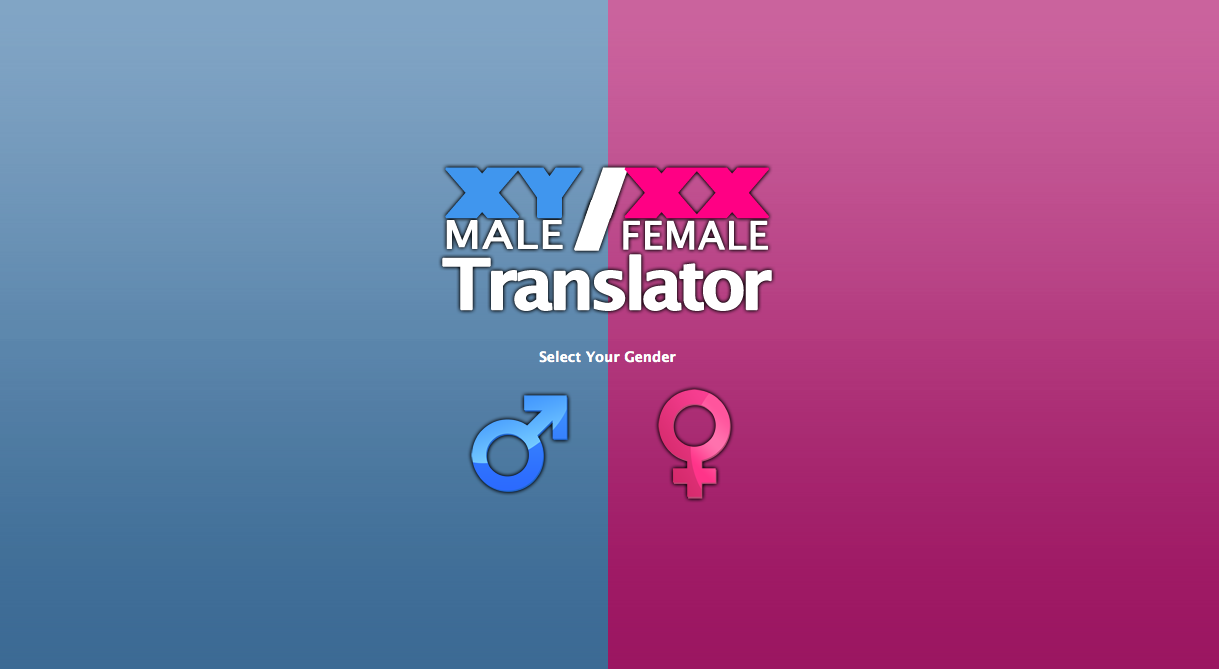
Male/Female Translator
She Says:
“I’m always right”
She Means:
“I’m know I’m wrong but you had better not tell me I’m wrong”
————–
She Says:
“Honey do you need help?”
She Means:
“You look like you need some help, but I’m giving you a chance to tell me you need me.”
————–
She Says:
“You have to learn to communicate.”
She Means:
“Just as long as you agree with me.”
——
She Says:
“I’m not attracted to you in that way.”
She Means:
“You are the ugliest son of a bitch I’ve ever laid eyes on.”
————–
She Says:
“Do you think she is pretty?”
She Means:
“Tell me I’m more beautiful than she is.”
————–
She Says:
“Baby, do I look fat in this?”
She Means:
“I know I look fat in this outfit…I just want to yell at you about it!”
————–
He Says:
“Of course I remember last night.”
He Means:
“What did you say your name was again?”
————–
She Says:
“Oh, how do you know her?”
She Means:
“Did you sleep with that slut?”
Everything Studio

Jessica Green and Tom Griffiths are the proprietors of Everything Studio. They first met at Pratt Institute in 2000 while studying graphic design. In 2004 Tom went on to receive an MFA at Yale while Jessica started a design company in New York. In 2007 they joined forces and began designing under the name Everything Studio.
Sagmeister: Here for good anthem
New Stefan Sagmeister TVC for Standard Chartered Bank.
Salt Films
Salt Films website by friend and fellow designer Driv.
Copyright © _dreams. All rights reserved.