_dreams

Experimenta Critique

January 25th, 2008

Can a typeface be neutral?
A typeface can certainly be more neutral than not, but absolute neutrality can be difficult to attain. ‘Both Univers and Helvetica came in for some criticism from Karl Gerstner: as being too smooth and producing too even a colour’.

The lack of colour must have been what the Modernists and Adrian Frutiger were looking for, but Gerstner claimed that because of this the typefaces were not as functional; “what has ocular clarity may appear monotonous when read.”. [Modern Typography: A critical history, Robin Kinross].

Univers was made to be the ‘universal’ typeface which gave it the functionality Modernism wanted for a typeface, but if the great designer of Univers (Adrian Fruiger) can not create the ultimate neutral typeface, can it be done? Neutral regular, medium, and bold may claim to be like their title, but unfortunately I don’t think they make the ‘neutral’ cut.

The typeface is a graduation project by Kai Bernau from the KABK, Royal Academy of Fine Arts in the Netherlands. He collected together ten typefaces and has taken their average measurements to make one (average) neutral typeface. The measurements included n-widths, H-widths, Caps height, Stroke weight and so on.

While the typeface at a glance might seem very neutral I think the flaw in the project’s neutrality is taking the average measurements from typefaces that ‘aren’t so neutral’ such as Documenta Sans, Syntax, TheSans etc. While they are great typefaces and seemingly have neutral traits, they actually have too much personality to even be considered.

So while Neutral is not neutral, it’s a pretty good typeface. It is useable (apart from having no italics), looks good (see example above), and is OpenType.

See more of the Neutral project here:
Letterlabor
by Nelson

Neil Donnelly

January 25th, 2008

by Nelson

Over the years, we have been watching you. Your campaigns of misinformation; suppression of dissent; your litigious nature, all of these things have caught our eye. With the leakage of your latest propaganda video into mainstream circulation, the extent of your malign influence over those who trust you, who call you leader, has been made clear to us. Anonymous has therefore decided that your organization should be destroyed. For the good of your followers, for the good of mankind–for the laughs–we shall expel you from the Internet and systematically dismantle the Church of Scientology in its present form. We acknowledge you as a serious opponent, and we are prepared for a long, long campaign. You will not prevail forever against the angry masses of the body politic. Your methods, hypocrisy, and the artlessness of your organization have sounded its death knell.

You cannot hide; we are everywhere.

We cannot die; we are forever. We’re getting bigger every day–and solely by the force of our ideas, malicious and hostile as they often are. If you want another name for your opponent, then call us Legion, for we are many.

Yet for all that we are not as monstrous as you are; still our methods are a parallel to your own. Doubtless you will use the Anon’s actions as an example of the persecution you have so long warned your followers would come; this is acceptable. In fact, it is encouraged. We are your SPs.

Gradually as we merge our pulse with that of your “Church”, the suppression of your followers will become increasingly difficult to maintain. Believers will wake, and see that salvation has no price. They will know that the stress, the frustration that they feel is not something that may be blamed upon Anonymous. No–they will see that it stems from a source far closer to each. Yes, we are SPs. But the sum of suppression we could ever muster is eclipsed by that of the RTC.

Knowledge is free.

We are Anonymous.

We are Legion.

We do not forgive.

WE DO NOT FORGET.

by Nelson

A New Kind of War

January 25th, 2008

An anonymous group of hackers, 100,000 strong, fittingly known as “Anonymous,” has declared war on the Church of Scientology. This is taking place as of right now. Their websites are down, their phone lines are down and their fax machines are busy printing out black page after black page, the result of people wanting them shut down globally. This war started when a video of Tom Cruise praising the Church of Scientology was leaked onto the internet. The death of their founder, L. Ron Hubbard which happened to fall on January 24th, 22 years today, also contributed to the spark that started this war. The official news broke on NBC 3 hours after the battle started.
 

click to watch video.

by Nelson

Earth Hour

January 24th, 2008

Created to take a stand against the greatest threat our planet has ever faced, Earth Hour uses the simple action of turning off the lights for one hour to deliver a powerful message about the need for action on global warming. This simple act has captured the hearts and minds of people all over the world. As a result, at 8pm on the 29 March, 2008 millions of people in some of the world’s major capital cities, including Copenhagen, Toronto, Chicago, Melbourne, Brisbane, Tel Aviv and Manila will unite and switch off for Earth Hour.

by Nelson

Paper Dome, Japan Osaka

January 24th, 2008

http://www.shigerubanarchitects.com/SBA_WORKS/SBA_PAPER/SBA_PAPER_8/SBA_paper_8.html 

A contractor of wooden building required an enclosed shelter that would allow outdoor work to proceed even in inclement weather

by Amy

Virgin Galactic

January 23rd, 2008

Virgin Galactic has released the final design of the launch system that will take fare-paying passengers into space.

by Nelson

Faith Fighter

January 23rd, 2008

http://www.molleindustria.org/faith-fighter

check out their other games too.

by Nelson

who don’t you like?

January 23rd, 2008

punish them.

by Nelson

Macheads

January 23rd, 2008

There’s this one girl in the video who has never slept with a windows user lol.
Quote: Muslims go to Mecca, we go to Mac-ca.

by Nelson

7th and 17th

January 23rd, 2008

http://www.youtube.com/watch?v=bE3HGJNlasg

 I saw it randomly on youtube. It’s simple and well made to me. I watched it couple times to try to figure out what’s the meaning behind it? To me, I see it as gaps between ages; a decade can change a lot of things, style is different, the way to live or survive is different and many other things~

by Amy

John Cage

January 22nd, 2008


In 1948, Cage joined the faculty of Black Mountain College, where he regularly worked on collaborations with Merce Cunningham. Around this time, he visited the anechoic chamber at Harvard University. (An anechoic chamber is a room designed in such a way that the walls, ceiling and floor will absorb all sounds made in the room, rather than bouncing them back as echoes. They are also generally soundproofed.) Cage entered the chamber expecting to hear silence, but as he wrote later, he “heard two sounds, one high and one low. When I described them to the engineer in charge, he informed me that the high one was my nervous system in operation, the low one my blood in circulation.” Cage had gone to a place where he expected there to be no sound, yet sound was nevertheless discernible. He stated “until I die there will be sounds. And they will continue following my death. One need not fear about the future of music.” The realization as he saw it of the impossibility of silence led to the “composition” of his most notorious piece, 4′33″.

http://en.wikipedia.org/wiki/John_Cage

by Nelson

Sentences on Conceptual Art

January 22nd, 2008

by Sol Lewitt

  1. Conceptual artists are mystics rather than rationalists. They leap to conclusions that logic cannot reach.
  2. Rational judgements repeat rational judgements.
  3. Irrational judgements lead to new experience.
  4. Formal art is essentially rational.
  5. Irrational thoughts should be followed absolutely and logically.
  6. If the artist changes his mind midway through the execution of the piece he compromises the result and repeats past results.
  7. The artist’s will is secondary to the process he initiates from idea to completion. His wilfulness may only be ego.
  8. When words such as painting and sculpture are used, they connote a whole tradition and imply a consequent acceptance of this tradition, thus placing limitations on the artist who would be reluctant to make art that goes beyond the limitations.
  9. The concept and idea are different. The former implies a general direction while the latter is the component. Ideas implement the concept.
  10. Ideas can be works of art; they are in a chain of development that may eventually find some form. All ideas need not be made physical.
  11. Ideas do not necessarily proceed in logical order. They may set one off in unexpected directions, but an idea must necessarily be completed in the mind before the next one is formed.
  12. For each work of art that becomes physical there are many variations that do not.
  13. A work of art may be understood as a conductor from the artist’s mind to the viewer’s. But it may never reach the viewer, or it may never leave the artist’s mind.
  14. The words of one artist to another may induce an idea chain, if they share the same concept.
  15. Since no form is intrinsically superior to another, the artist may use any form, from an expression of words (written or spoken) to physical reality, equally.
  16. If words are used, and they proceed from ideas about art, then they are art and not literature; numbers are not mathematics.
  17. All ideas are art if they are concerned with art and fall within the conventions of art.
  18. One usually understands the art of the past by applying the convention of the present, thus misunderstanding the art of the past.
  19. The conventions of art are altered by works of art.
  20. Successful art changes our understanding of the conventions by altering our perceptions.
  21. Perception of ideas leads to new ideas.
  22. The artist cannot imagine his art, and cannot perceive it until it is complete.
  23. The artist may misperceive (understand it differently from the artist) a work of art but still be set off in his own chain of thought by that misconstrual.
  24. Perception is subjective.
  25. The artist may not necessarily understand his own art. His perception is neither better nor worse than that of others.
  26. An artist may perceive the art of others better than his own.
  27. The concept of a work of art may involve the matter of the piece or the process in which it is made.
  28. Once the idea of the piece is established in the artist’s mind and the final form is decided, the process is carried out blindly. There are many side effects that the artist cannot imagine. These may be used as ideas for new works.
  29. The process is mechanical and should not be tampered with. It should run its course.
  30. There are many elements involved in a work of art. The most important are the most obvious.
  31. If an artist uses the same form in a group of works, and changes the material, one would assume the artist’s concept involved the material.
  32. Banal ideas cannot be rescued by beautiful execution.
  33. It is difficult to bungle a good idea.
  34. When an artist learns his craft too well he makes slick art.
  35. These sentences comment on art, but are not art.

http://www.altx.com/vizarts/conceptual.html

by Nelson

Building 7

January 22nd, 2008

“The point is not to play a pseudo-postmodern game of reducing the WTC collapse to just another media spectacle, reading it as a catastrophe version of the snuff porno movies; the question we should have asked ourselves as we stared at the TV screens on September 11 is simply: Where have we already seen the same thing over and over again?

The fact that the September 11 attacks were the stuff of popular fantasies long before they actually took place provides yet another case of the twisted logic of dreams: it is easy to account for the fact that poor people around the world dream about becoming Americans — so what do the well-to-do Americans, immobilised in their well-being, dream about? About a global catastrophe that would shatter their lives — why? This is what psychoanalysis is about: to explain why, in the midst of well-being, we are haunted by nightmarish visions of catastrophes.”

by Nelson

Crouwel Fever

January 22nd, 2008

by Nelson

More Wim Crouwel

January 22nd, 2008

by Nelson

Wim Crouwel:Alphabets

January 22nd, 2008

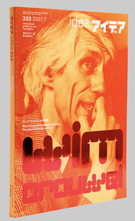
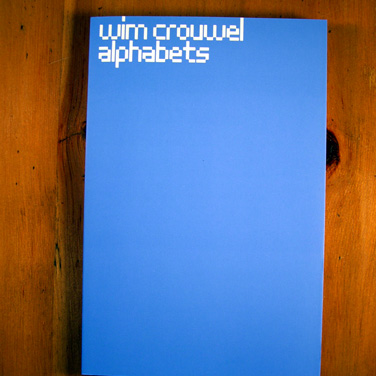
Wim Crouwel is one of the Netherlands’ greatest design icons. He is especially admired for his systematic approach and his creative handling of the shape of letters. Several of his typefaces have been released in digital form: the New Alphabet in three weights, the Fodor and Stedelijk ‘museum’ alphabets, and recently, the entire Gridnik family of letters. Today, young graphic designers pay tribute to Crouwel’s work, which dates back to the late 1950s and 1960s. Now that his typefaces are available to designers throughout the world, we are fascinated by how Crouwel himself applied them in his graphic work and long to better understand the ideas, philosophy and historical contexts of his designs.

by Nelson

FAIL

January 22nd, 2008

amullins: So, I purchased a couple domains (failuretothink.com/org). I need ideas for content. A quick google search brings up an a$$load of articles on the iraq war. I was hoping for something a little more lighthearted…. I’d be open to collaboration on a project, as well (if you don’t want to give away your ideas).

AndyRoss:So, let me get this straight:you bought failuretothink.com without figuring out what you would do with it beforehand?

Sounds like you just wrote your first article.

http://www.qbn.com/topics/540396/

by Nelson

ALARM DANCE-MANIA!

January 22nd, 2008

I found this guys website through another person porfolio site through someone’s blog. And I didn’t expect to laugh so hard when I randomly clicked on a project. HAHAHAH, check it out.

by John

http://bkmk.ru/x/

January 21st, 2008

unfortunately the website never came back again. this was the original site that inspired my _friends project. however, i did find one made by the blog writer, who was probably inspired by the same idea.

http://merdanchik.com/x/

they have some nice drawings, and if you notice, some of their artists contributed on _friends too!

by Nelson

Medialab-Prado Madrid

January 20th, 2008

Medialab Prado is aimed at the production, research, and dissemination of digital culture and of the area where art, science, technology, and society intersect.

Our primary objective is to create a structure where both research and production are processes permeable to user participation. To that end, Medialab Prado offers:

· A permanent information, reception, and meeting space attended by cultural mediators.

· Open calls for the presentation of proposals and participation in the collaborative development of projects.
We have several on-going programmes, which are as follows:

Interactivos?: creative uses of electronics and programming (video)

Inclusiva.net: research and reflections on the network culture

Visualizar: data visualization tools and strategies (video)

Laboratorio del Procomún: trans-disciplinary discussion on the Commons

AVLAB: audio-visual and sound creation (video)

Visualizing: tracing an aesthetics of data review

by Nelson

humanflows

January 20th, 2008

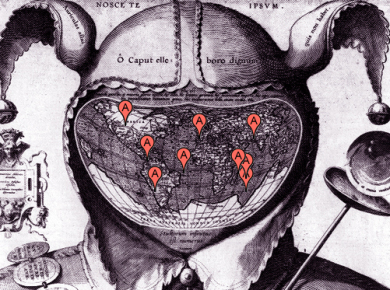
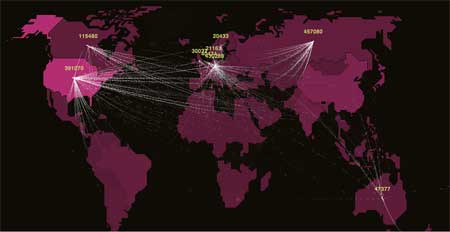
Human Flow’s aim is to “visually and interactively mapping global migrations in a bid to understand its causes.” Why do you think that there is a need to map migration in a new way? Isn’t there already online instruments which do just that? Which new elements does HF brings to the issue?

Most of the online instruments tend to concentrate on particular moments on migration, showing a partial view of the problem. This happens because global migrations are strongly connected with the current situation (economical, political, social, etc.) of each sending and receiving country, and that produces one of the usual ideas of the migrant: they migrate because they are poor, or their home counties are insecure. But even if this is partially true, I think that seeing this migrations from an historical point of view can raise interesting questions: Why did migrations to Germany become so strong from mid nineties, even from European citizens? Why is so important for Latin American people to go to the United States? Why are Africans risking their lives crossing the ocean to be here? Why were migrations in the eighties so different from today’s migrations?

by Nelson

Jonathan Calugi

January 20th, 2008

by Nelson

LOLinator

January 19th, 2008

http://www.apple.com

by Nelson

When my daughter Alison was born, in the tradition of a new parent, I began to photograph her, initially in a separate and private body of work. However, in the process of documenting Alison’s growth, I developed a passionate interest in human relationships and capturing intimate moments in the lives of family and friends.

by Nelson

Skin Type

January 19th, 2008

by Nelson

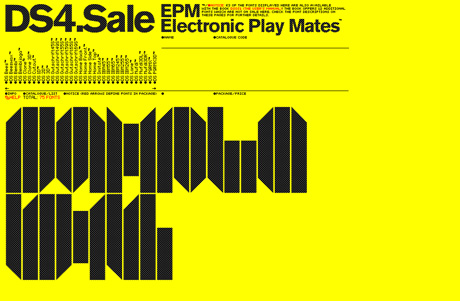
DS4SALE

January 19th, 2008

by Nelson

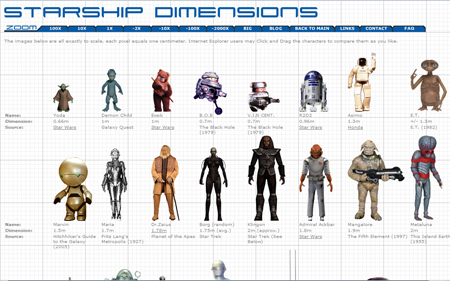
Starship Dimensions

January 18th, 2008

by Nelson

Ken Meier blog

January 18th, 2008

by Nelson

….

January 18th, 2008

by Nelson
Proudly powered by WordPress. Theme developed with WordPress Theme Generator.
Copyright © _dreams. All rights reserved.